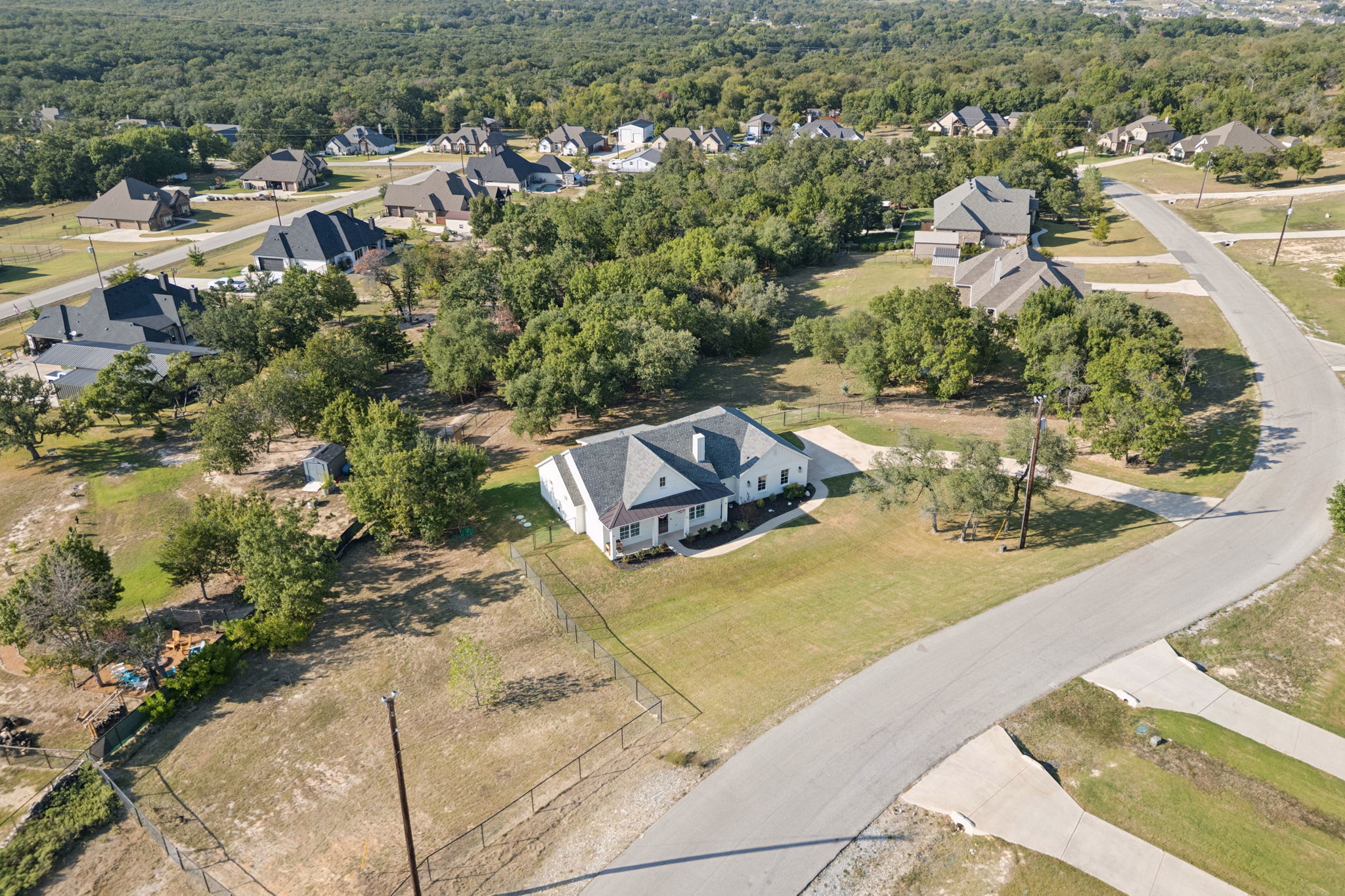
When looking at acreage properties around Dallas-Fort Worth, it’s pretty easy to convince yourself that you need $2 million or $3 million.
You don’t.
Now, can you spend $3 million on a home with land in DFW?
Oh, absolutely. We can take care of that for you.
But one of the things we’ve seen over and over again is buyers assuming that the acreage lifestyle they want is wildly outside their budget before they’ve actually figured out what their options are.
On our DFW Real Estate Weekly radio show, we talked through a pretty realistic example.
A buyer wants a couple of acres. They’d like to stay under $800,000. They don’t want a massive renovation project. They don’t want to buy raw land and spend two years building. They’d like something mostly ready that they can personalize over time.
Is that possible in Dallas-Fort Worth?
Yes.
The harder question is where, and what tradeoffs are you willing to make to get it?
Can You Buy a Home With Acreage Under $800,000 in DFW?
Yes. Buyers can find homes with acreage below $800,000 in the greater Dallas-Fort Worth area, particularly when they’re willing to expand their search beyond the most expensive close-in suburbs.
That doesn’t mean every $800,000 buyer can get five pristine acres, a brand-new 5,000-square-foot house, a four-stall horse barn, a pool, a workshop and a 20-minute commute to downtown Dallas.
Come on.
Budget still matters.
But the difference between “I can’t afford acreage” and “I can afford acreage if I’m willing to make these two compromises” can be enormous.
That’s why we don’t like beginning this process by jumping in the car and looking at houses.
Slow down before you speed up.
What Does $800,000 Buy on Acreage in Dallas-Fort Worth?
There isn’t one answer because an acreage property’s value is determined by much more than the house itself.
Your $800,000 budget may have to cover some combination of:
- The home
- One or more acres
- Fencing
- Barns
- Workshops
- Detached garages
- Pools
- Ponds
- Guest quarters
- Horse facilities
- Septic and well systems
- Driveways and other improvements
Two houses with the same square footage and acreage can be dramatically different properties.
One may already have the workshop you need.
The other may require you to build one.
One may have usable fencing.
The other may need substantial fence work immediately.
One may have exactly the land configuration you need for a horse.
The other may technically have two acres, but those two acres don’t function the way you hoped they would.
Acreage buyers have to evaluate the whole property.
Not just the house.
Where Should Buyers Look for Acreage Homes Under $800,000?
Location changes everything.
A buyer may begin thinking, “I want a couple of acres somewhere in DFW.”
Once we start identifying actual properties, the conversation becomes much more specific.
Maybe there are options west toward Aledo.
Maybe north toward Anna.
Maybe east toward Parker and Lucas.
Maybe south toward Mansfield or Burleson.
Then the buyer gets to make a decision.
“I’d go that far north.”
“I won’t go that far east.”
“I love the property, but that commute would make me miserable.”
Good.
That’s progress.
Aledo and Areas West of Fort Worth
Buyers looking west of Fort Worth may consider Aledo and surrounding areas when searching for homes on land.
The attraction is obvious. You can pursue more space while remaining connected to Fort Worth.
The challenge is that desirable acreage can carry a premium, so buyers below $800,000 may need to compromise on the home’s age, size, condition, exact acreage, or improvements.
Anna and Areas North of Dallas
For buyers who can tolerate a longer drive or don’t have a daily commute, moving farther north can open additional possibilities.
That matters more today because not every buyer needs to drive into an office five days a week.
If your commute is flexible, your acreage search can be flexible.
And flexibility creates options.
Nevada and Eastern Collin County
For buyers looking east, Nevada represents the kind of market that can become interesting when the goal is more land without paying close-in Collin County prices.
The question isn’t simply whether you can find land.
The question is whether the location works for your actual life.
Red Oak and Areas South of Dallas
Going south can create another set of opportunities for buyers who need access to Dallas but want more room than a traditional suburban lot provides.
Again, don’t choose the location because somebody wrote “Best Places for Acreage” on the internet.
Choose it because it works for you.
The Biggest Tradeoff Is Usually Location
A lot of buyers begin by thinking the house will be the compromise.
It might be.
But location is often the bigger variable.
Suppose you want:
- Two to three acres
- A mostly move-in-ready home
- A workshop
- Room for a horse
- No major renovation
- A purchase price below $800,000
Great.
Now tell me how far you’re willing to drive.
That’s where the search gets interesting.
If you need to be 20 minutes from a specific office, school, church, family member, or business, that constraint matters.
If you work from home and you’re comfortable being farther from major employment centers, your options can change dramatically.
The phrase “close to Dallas” or “close to Fort Worth” means nothing until we know what close means to you.
Twenty minutes?
Forty-five?
An hour?
That’s why acreage searches need to be built around the buyer instead of around a generic map.
Decide What You Actually Want the Land For
This may be more important than your budget.
Why do you want acreage?
If the answer is simply, “I’ve always wanted land,” that’s a start.
But it’s not enough.
What do you want to do there?
Maybe you want:
- A horse at home instead of boarding it somewhere else
- Chickens or other animals
- A workshop for your business
- Storage for collector cars
- A garden or orchard
- A pool and outdoor entertaining area
- A place for children to explore
- Room for a trampoline or sport court
- More privacy
- Guest quarters or multigenerational space
Those are different dreams.
They require different properties.
A car collector may care far more about driveway configuration, garage space, and a workshop than pasture.
A horse owner may care enormously about fencing, barns, and local restrictions.
A family that simply wants room for the kids to play might discover that one acre is plenty.
Don’t pay for five acres because five sounds better than two.
Buy the property that serves the life you’re trying to build.
Horse Properties Under $800,000 Require More Than Acreage
This is where buyers can get themselves in trouble.
You find two acres.
Perfect. Bring the horse.
Not necessarily.
Owning acreage does not automatically mean you can use it however you want.
Depending on the property, buyers may need to investigate:
- City regulations
- County rules
- Deed restrictions
- HOA restrictions
- Animal limitations
- Fencing
- Barn requirements
- Access to water
- Property configuration
You may find an acre where chickens aren’t permitted.
You may find another property where chickens are fine, but goats aren’t.
You may find enough land for a horse but discover restrictions on the structures you planned to build.
The details matter a lot.
Don’t Ignore the Barn, Fence or Workshop
Acreage properties have a funny way of making buyers focus on the house and treat everything else like it’s free.
It’s not.
That barn isn’t imaginary.
Neither is the fence.
Neither is the driveway, workshop, septic system, or well.
If you’re comparing two properties under $800,000, you need to evaluate the cost of getting each property where you want it.
One property may be $725,000 but needs substantial improvements.
Another may be $790,000 with the expensive stuff already done.
The cheaper property isn’t necessarily the better value.
This is where getting realistic numbers before buying becomes extremely important.
Well, Septic and Utilities Matter on DFW Acreage
Many suburban homeowners have never thought about a septic system or private well.
Then they start shopping for acreage.
Welcome to the party.
Depending on location, a home on land may have:
- City water
- Well water
- City sewer
- Septic
- Traditional electric service
- Alternative energy systems
None of those automatically make a property good or bad.
They do affect ownership.
Before purchasing, understand what systems serve the property, their condition, their maintenance requirements, and what replacement or repair could eventually cost.
Acreage ownership is fantastic when you understand what you’re buying.
Surprises are less fantastic.
Should You Buy a Fixer-Upper to Get More Land?
Maybe.
This is where knowing yourself matters.
In the example from our radio show, we talked about a buyer who wanted something mostly ready. They’d make personal changes, but they weren’t interested in gutting the house or starting a major construction project.
That’s a perfectly reasonable position.
Another buyer may say, “I’ll take the ugly house if I can get the right three acres.”
Also reasonable.
There are really several versions of the acreage search:
- Buy it and move in
- Buy it, remodel it, then love it
- Buy land and build
- Buy something close and add the missing features over time
None is automatically better.
The best answer depends on your money, time, patience, and goals.
What If You Have to Sell Your Current DFW Home First?
This is where a lot of acreage dreams die before they should.
Someone owns a beautiful home in Plano, Richardson, Fort Worth, or another established DFW community.
They have equity.
They may have a great mortgage rate.
They bought at a great price.
Then they look at acreage and think, “How could we possibly do this?”
Well, let’s do the math.
What would your current property reasonably sell for?
How much equity do you have?
What would the acreage property cost?
What would improvements cost?
What would your new financing look like?
How long might it take to coordinate the sale and purchase?
You don’t need all the answers before beginning the conversation.
That’s the point of the conversation.
You may discover that you should stay exactly where you are.
You may discover you need two years to save and prepare.
Or you may discover that the thing you’ve treated as a five-year dream is realistic much sooner.
That’s useful information either way.
Don’t Let Your Mortgage Rate Trap You in a House
This deserves its own section because we hear it constantly.
“I have such a good mortgage rate. I can’t move.”
Can’t?
Or don’t want to?
Those are different.
A great mortgage rate has real financial value. I’m not dismissing that for one second.
But your mortgage rate is one component of your life.
If the right property meaningfully improves your family life, gives you room for a business, eliminates horse boarding, creates multigenerational living options, provides needed space or gets you into the lifestyle you’ve wanted for years, then the entire equation deserves consideration.
Don’t make a bad financial decision because you’re impatient.
But don’t refuse to investigate a great life decision because one number feels too good to give up.
Do the math.
Then decide.
Why Buying When You Don’t Have to Move Can Be an Advantage
I actually think one of the best times to move can be when you don’t have to.
You’re not desperate.
You’re not trying to escape a terrible situation.
You’re not making decisions under artificial pressure.
You can wait.
You can watch.
You can learn the market.
You can reject properties that aren’t right.
That’s powerful.
If you’re already in a good situation and looking for a great one, patience becomes an advantage.
Acreage properties are unusual by nature.
You’re not comparing 40 identical houses in the same subdivision.
The right combination of house, land, improvements, restrictions, location and price may take some time to appear.
That’s okay.
What Should You Do Before Touring Acreage Homes?
Don’t start by falling in love with a listing.
Start with the math.
A serious acreage buyer should understand:
- Approximate value of the current home
- Available equity
- Comfortable purchase budget
- Desired acreage
- Maximum commute
- Must-have property features
- Preferred areas
- Acceptable renovation level
- Animal or land-use requirements
- Expected costs for missing improvements
You can figure out a surprising amount of this in one good conversation.
Then go look at houses.
Not the other way around.
Can an $800,000 Budget Really Buy the Acreage Lifestyle You Want?
Possibly, and that’s the point.
Don’t assume no, but don’t assume yes either.
Figure it out.
You may start dreaming about five acres and discover that two acres with a great workshop is actually better.
You may think you need to move an hour outside DFW and discover an option much closer.
You may assume you need $2 million and discover that your actual priorities can be met for hundreds of thousands less.
Or you may discover that $800,000 doesn’t buy what you want in the location where you want it.
That’s useful too.
Clarity beats guessing.
Every time.
Frequently Asked Questions About DFW Acreage Homes Under $800,000
Can you buy a home with acreage under $800,000 in Dallas-Fort Worth?
Yes. Buyers can find acreage properties below $800,000 in parts of the greater DFW area, although availability, home condition, acreage, and improvements vary significantly by location.
Where should I look for affordable acreage near DFW?
Areas worth exploring may include communities north, south, east and west of the urban core, including Sherman, Nevada, Red Oak and areas around Aledo, depending on your budget and commute.
Can I get several acres and a house for under $800,000?
Potentially. Your options generally increase as you become more flexible about location, age of the home, condition, and included improvements.
Can I find a horse property under $800,000 in DFW?
Potentially, but acreage alone does not make a property suitable for horses. Buyers should investigate fencing, barns, land configuration, and local restrictions.
Do acreage homes usually have wells and septic systems?
Some do, while others have city water, sewer, or a combination of utility systems. It depends on the property’s location.
Should I sell my current home before buying acreage?
Not automatically. The best sequence depends on your equity, financing, timeline, and the specific properties involved.
Ready to Find an Acreage Home in Dallas-Fort Worth?
If you’re dreaming about a home on land, don’t start by assuming you can’t afford it.
And don’t start by assuming every property with two acres is the dream either.
Start by figuring out what you actually want, what your current home is worth, what you’re comfortable spending, and where those two numbers intersect.
Then we’ll go find it.
The Todd Tramonte Home Selling Team helps buyers and sellers throughout Dallas-Fort Worth make these moves every day. Whether you’re selling a suburban home to buy acreage, looking for a horse property, trying to find room for a workshop, or simply wondering whether the dream you’ve had for years is financially realistic, we’ll help you get clear on the options before you make a decision.
Visit DallasHomeRealty.com or call 214-216-2161 to talk with the Todd Tramonte Home Selling Team about buying or selling your next DFW home.
Dream about it.
Then do the math.
You may be a lot closer than you think.

