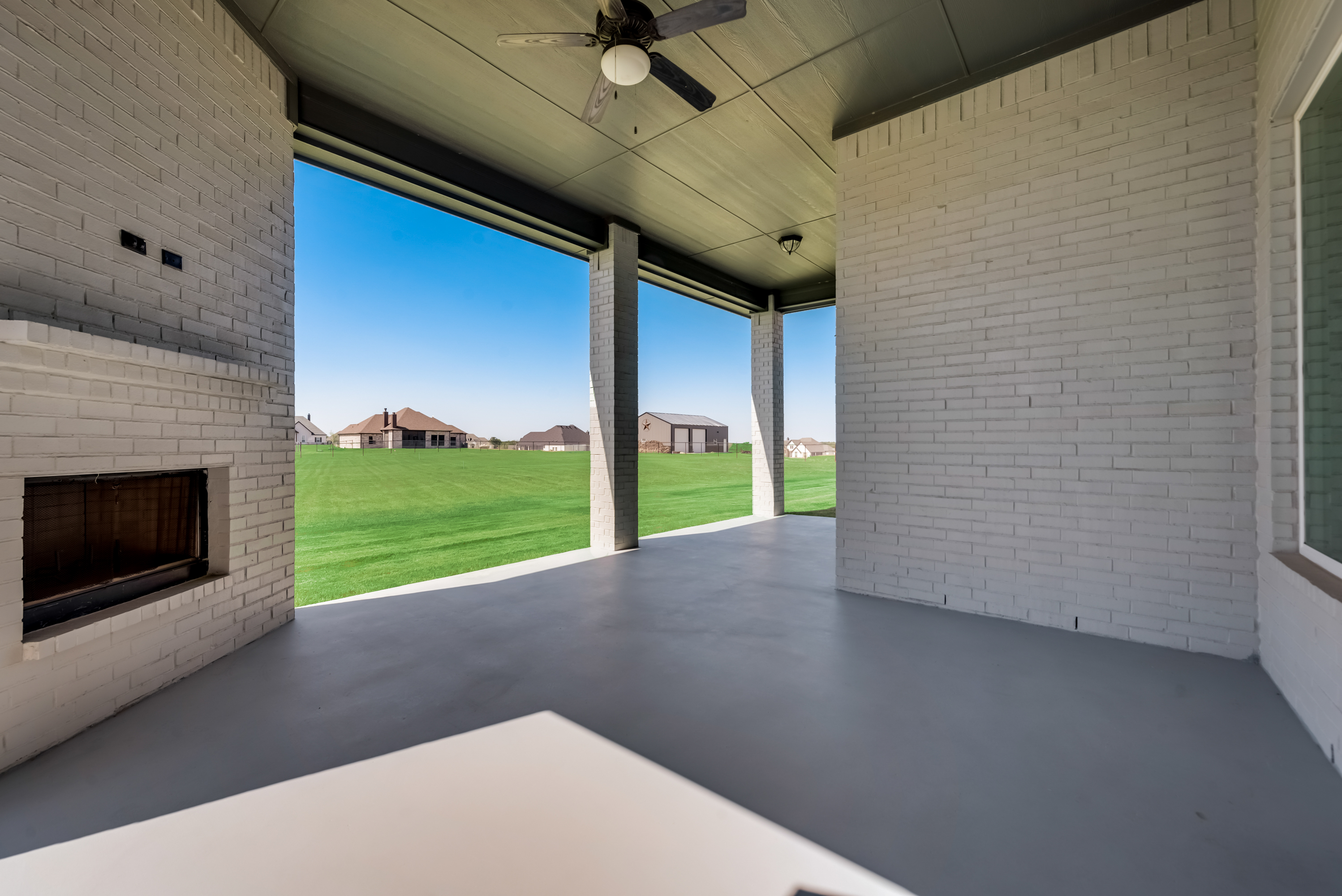
You can love your house and still want something different.
That’s an important place to start.
A lot of Dallas-Fort Worth homeowners aren’t sitting around miserable in houses they hate. Quite the opposite.
They have a great house.
Great neighborhood.
Great schools.
Maybe a mortgage rate they’d rather not discuss with anyone who bought recently because they don’t want to make them cry.
Life is good.
And yet there’s this idea that keeps coming back.
Land.
A couple of acres. Maybe more. Enough room for a workshop. A garden. Some chickens. A horse. A pool. A pond. A big backyard where the kids can disappear for three hours without actually leaving the property.
That’s not necessarily dissatisfaction.
Sometimes it’s simply a picture of how you’d like to live next.
And I think there are far more Dallas-Fort Worth homeowners dreaming about acreage than are willing to admit it.
Why Do People Want to Live on Acreage in Dallas-Fort Worth?
The short answer is freedom.
Not freedom in some dramatic, move-to-the-middle-of-nowhere-and-live-off-the-grid sense.
Although, sure. We’ve met those folks too.
Most buyers want practical freedom.
They want enough property to do things that are difficult or impossible on a traditional suburban lot.
That might mean:
- More privacy between neighbors
- Room for children to play
- Space for horses or other animals
- A workshop for a business or hobby
- A garden or orchard
- A swimming pool or sport court
- RV, boat, trailer, or collector-car storage
- A barn or additional garage
- Outdoor entertaining space
- Guest quarters or a casita
- More flexibility for multigenerational living
The acreage isn’t really the point.
What you can do with it is the point.
A Bigger House Isn’t the Same as More Land
This distinction matters.
When someone tells us, “We need more space,” the easy real estate answer is to search for a bigger house.
Four bedrooms becomes five.
2,800 square feet becomes 3,800.
Done.
Except sometimes that’s not what the buyer meant at all.
You can buy a very large house on a very small lot.
If what you’re craving is outdoor space, privacy, a workshop, animals, a garden, or room for your family to spread out, another thousand square feet inside the house may solve absolutely nothing.
That’s why the first question shouldn’t be, “How many bedrooms do you want?”
It should be, “What do you want to be able to do that you can’t do where you live now?”
That’s a much better conversation.
For Some DFW Families, Acreage Is About the Kids
This was a big part of it for me.
I’ve pretty much always known I didn’t want to live forever on a normal lot in a normal house.
I wanted room to play outside.
As a kid, I imagined riding four-wheelers and having room to explore. I knew I wanted fruit trees someday. Later, that evolved into gardens, outdoor spaces, a pool, a sport court, ponds, play areas, and all sorts of things.
But the underlying desire never really changed.
Room.
Room to grow.
Room to play.
Room to have people over.
Room to get outside and do something.
That’s a very different lifestyle from having a bigger media room.
Neither is wrong.
I just knew which one I wanted.
And we talk to plenty of families across Dallas-Fort Worth who feel exactly the same way.
For Other Buyers, Acreage Is About Horses and Animals
This is one of the most practical reasons people begin searching for homes with land in DFW.
Imagine living in Plano and driving 30 minutes to visit the horse you’re paying to board somewhere else.
At some point you’re going to have the thought.
“Why couldn’t we have the horse at home?”
Maybe you can.
The same thing happens with people who want chickens, goats, pigs, or other animals.
But this is where the dream has to meet reality.
Owning an acre doesn’t automatically mean you can have whatever animals you want.
Depending on the property, buyers may need to investigate:
- City ordinances
- County regulations
- Deed restrictions
- HOA rules
- Animal limits
- Barn requirements
- Fencing
- Property configuration
You can find an acre where chickens aren’t permitted and another property where the rules are completely different.
So don’t buy the acreage first and figure out whether your horse can live there second.
That would be backward.
Workshops Are Driving Some DFW Acreage Searches
Not everybody wants a horse.
Some people want a shop.
We’ve worked with buyers who run businesses, collect cars, work on equipment, need storage, or simply have hobbies that don’t fit neatly into a two-car suburban garage.
Seven collector cars require somewhere to put seven collector cars.
Your HOA probably isn’t going to be thrilled with the solution you invent in the driveway.
A small acreage property can create room for:
- Detached workshops
- Additional garages
- Covered equipment storage
- RV and boat parking
- Business equipment
- Hobby space
- Larger driveways
For the right buyer, the workshop may matter more than the house.
That’s why acreage searches get interesting.
You’re not simply shopping for bedrooms, bathrooms, and granite countertops.
You’re shopping for what the whole property allows you to do.
Gardens, Orchards, and Outdoor Living Matter Too
I remember being outside during a pretty terrible season of life, building a garden box out of old fence posts.
We’d gotten some bad news. Something hard had happened.
And there I was working outside with my hands.
It became pretty obvious to me that when I needed to clear my head, I went outside.
I went to the yard.
I went to the garden.
I built something.
I worked with my hands.
And I remember thinking, I want more of this.
That doesn’t mean everyone needs to go buy acreage because gardening is cheaper than therapy.
It means your home affects how you live.
Some people want restaurants downstairs from their condo.
Fantastic.
Some want a golf course behind the house.
Some want a greenhouse.
Some want an orchard.
Some want enough room to grow tomatoes, build a fire, invite 20 people over, and let the kids run wild.
The right property is the one that supports the way you actually want to live.
A Low Mortgage Rate Can Make the Acreage Dream Feel Impossible
For plenty of DFW homeowners, this is the elephant standing right in the middle of the living room.
The mortgage rate.
You bought years ago.
Your rate is fantastic.
Moving means giving it up.
That’s real.
But it still doesn’t answer the larger question.
What would your current house sell for?
How much equity do you have?
What would the acreage property you actually want cost?
What would your monthly payment look like?
Would you eliminate another expense, such as horse boarding or rented storage?
Would a workshop support your business?
Would the move materially improve your family’s lifestyle?
I don’t know the answer until we do the math.
Neither do you.
A mortgage rate deserves consideration.
It doesn’t deserve veto power over every future decision before you’ve even investigated the alternatives.
The Acreage Lifestyle May Be More Affordable Than You Think
This comes up constantly.
A homeowner sees somebody else’s beautiful property with a barn and a couple of acres and thinks:
“That’s probably $3 million.”
Maybe.
But maybe not.
It’s possible for a buyer to find a home with an acre or two and a four-stall barn for closer to $600,000 or $700,000, depending on location and the property.
That’s not cheap.
It’s also nowhere near $3 million.
The broader point matters.
Don’t build the entire financial argument against your dream using a number you made up.
Find out.
The right acreage property may require changing locations.
It may require compromising on the house.
It may require waiting a year.
It may require selling your current home and using the equity.
Or it may genuinely be outside your budget right now.
Fine.
Reality is useful.
Guessing isn’t.
Where Are DFW Buyers Looking for Acreage?
The answer depends heavily on commute, budget, schools, land use, and how much acreage the buyer wants.
Someone living in Plano may consider moving farther east or north for additional acreage.
Someone in western Fort Worth may look toward Aledo, Crowley, Azle or surrounding areas.
The key is defining how far you’re actually willing to go.
If you work from home, the search changes.
If you have to be downtown every morning, it changes again.
“Close” isn’t a distance.
It’s a preference.
Figure out yours.
One Acre May Be Enough
People hear “acreage lifestyle” and start picturing ten acres.
Slow down.
You may not want ten acres.
You may not even want five.
If you’re coming from a traditional one-fifth-acre suburban lot, one acre can feel enormous.
Depending on the property and local restrictions, a smaller acreage homesite may provide enough room for some combination of:
- A pool
- Workshop
- Garden
- Play area
- Outdoor kitchen
- Detached garage
- Animals
- Additional parking
- More privacy
The question isn’t whether five acres sounds cooler than one.
Of course it does.
The question is whether you’ll use it.
More land means more mowing, more fencing, more maintenance, and usually more money.
Buy the amount of property that serves the dream.
Not your ego.
Acreage Living Comes With Tradeoffs
Land gives you freedom.
It also gives you work.
Depending on the property, you may need to deal with:
- Septic systems
- Private wells
- Fencing
- Longer driveways
- Mowing
- Trees and brush
- Barn maintenance
- Pond maintenance
- Longer drives to shopping
- Fewer nearby services
Some people read that list and think, “Absolutely not.”
Great.
We just saved you a move.
Other people read it and think, “When can we go?”
Also great.
There is no perfect home.
I’ve always laughed a little at the phrase “dream home” because every property has tradeoffs.
The objective isn’t perfection.
It’s finding the tradeoffs you’re happy to make.
Don’t Start Your Acreage Search by Looking at Houses
This is one of the most important things we tell buyers.
Slow down before you speed up.
If you’re already living in a good situation, use that to your advantage.
Don’t spend Saturday driving around North Texas falling in love with random properties.
First, sit down and figure out:
- Why you want acreage
- How much land you actually need
- What you’ll use the property for
- What your current home is worth
- How much equity you have
- What you’re comfortable spending
- How far you’re willing to commute
- Which features are non-negotiable
- Which features are simply nice to have
- Whether you’re willing to remodel
- Whether building might make sense
You can answer an enormous amount of this before setting foot on a property.
Then your search becomes dramatically better.
Maybe You Shouldn’t Move at All
There’s another possible outcome.
You investigate acreage.
You look at the numbers.
You think about the commute.
You consider the maintenance.
And you decide:
Nope.
We’re staying.
Good.
Then ask another question.
What is it about the acreage lifestyle that attracted you?
Maybe you wanted better outdoor living.
Could you improve your deck?
Maybe you wanted a garden.
Could you build one?
Maybe you wanted more room for entertaining.
Could you redesign your backyard?
Maybe the dream isn’t actually about moving.
Maybe it’s about making the home you already own work better for your life.
We’ve had clients we helped buy a house many years ago who still call us for exactly these conversations.
That’s what we mean by value beyond the sale.
Sometimes serving a homeowner means helping them move.
Sometimes it means helping them realize they shouldn’t.
Why the Best Time to Consider Acreage May Be When You Don’t Have to Move
There is a tremendous advantage to not being desperate.
If your current home works, you’re negotiating from a position of patience.
You don’t have to buy the first property.
You don’t have to force the numbers.
You don’t have to compromise on something that really matters.
You can learn.
You can plan.
You can save.
You can prepare your current home for sale.
You can wait for the right property.
Maybe the process takes three months.
Maybe it takes a year.
Maybe it takes several years.
Who cares?
You’re already in a good situation.
You’re not escaping.
You’re pursuing.
That’s a much better way to make a major real estate decision.
Frequently Asked Questions About Living on Acreage in DFW
Why are DFW homeowners moving to acreage?
Common reasons include more privacy, room for children, horses or livestock, workshops, gardens, outdoor recreation, storage, and greater flexibility in how they use their property.
How much acreage do most buyers need?
Many buyers discover that one to five acres provides plenty of usable space. The right amount depends on what you plan to do with the land.
Where can I find homes on acreage near Dallas-Fort Worth?
Buyers often explore areas such as Aledo, Crowley, Weatherford, Azle, Nevada, Anna, Parker, Lucas, Fairview, and communities farther outside the urban core.
Can I keep horses or chickens on an acreage property in DFW?
Sometimes. Ownership of land does not automatically permit animals. City ordinances, county regulations, deed restrictions, and HOA rules should be reviewed before purchasing.
Is acreage living more expensive?
It can be. Buyers should account for the purchase price as well as fencing, mowing, wells, septic systems, barns, equipment, and other property maintenance.
Should I sell my current home to buy acreage?
Maybe. Start by determining your home’s value, available equity, desired acreage budget, financing options, and lifestyle goals before deciding whether a move makes sense.
Thinking About Living on Acreage in Dallas-Fort Worth?
You don’t need to hate your current house to consider something better for your next season.
And you don’t need to put a For Sale sign in the yard tomorrow because you’ve always wanted a few acres.
Start with clarity.
- What do you want?
- Why do you want it?
- What would your current home sell for?
- What would the property you’re imagining actually cost?
Then decide.
You may discover that moving to acreage makes no sense whatsoever.
You may also discover that the dream you’ve quietly treated as impossible is far more realistic than you thought.
The Todd Tramonte Home Selling Team helps Dallas-Fort Worth homeowners work through exactly these decisions. Whether you’re buying a home on land, selling your current DFW home to make the move possible, or simply trying to understand your options, we’ll help you get the facts before you make the decision.
Visit DallasHomeRealty.com or call 214-216-2161 to talk with the Todd Tramonte Home Selling Team about buying or selling your next home.
You don’t have to be in a hurry.
But you are allowed to dream.
:format(webp):quality(80)/u.realgeeks.media/dallashomerealty/modern-home-large-red.png)
:format(webp):quality(80)/u.realgeeks.media/dallashomerealty/map-search-black.png)