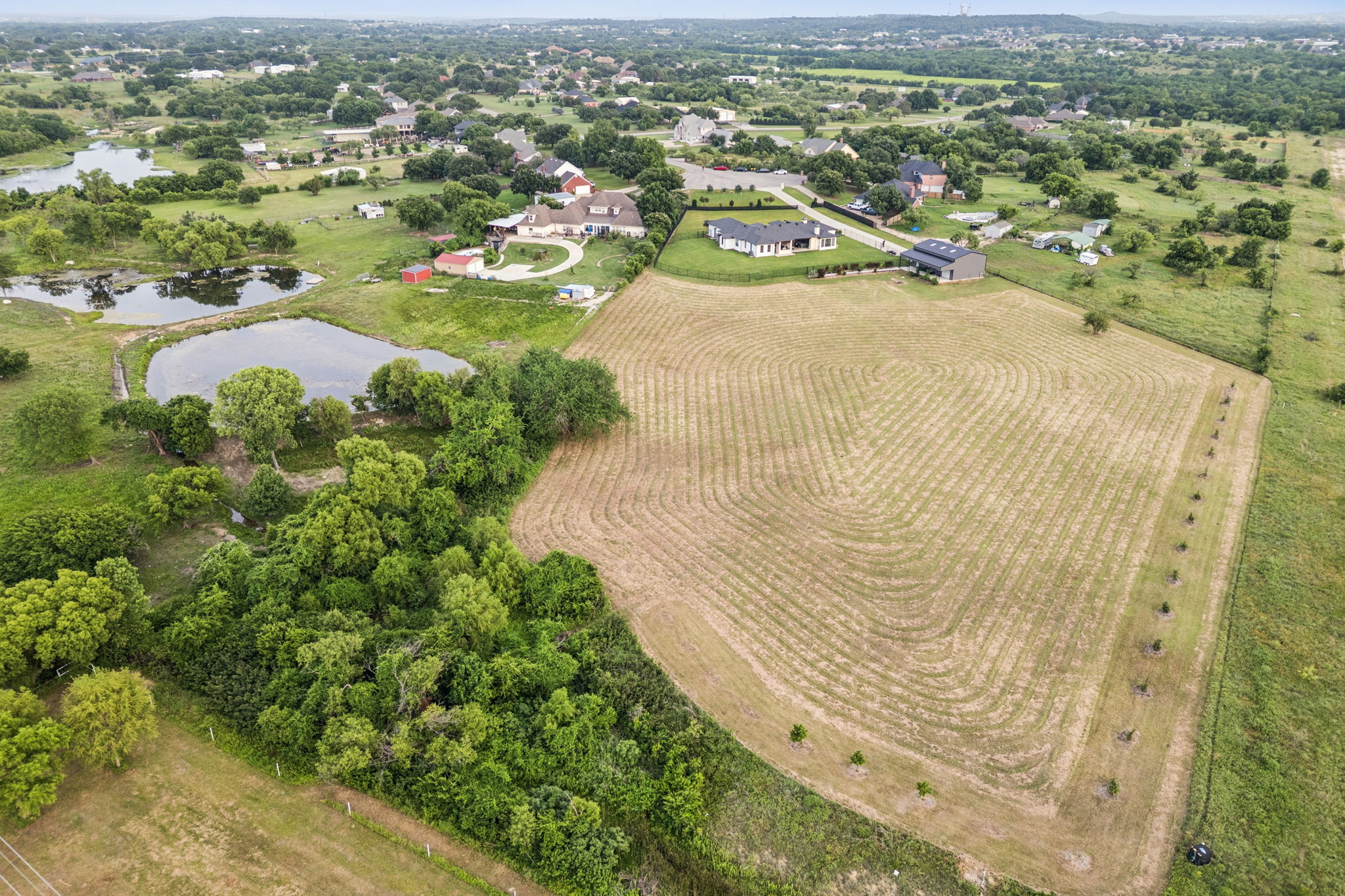
One of the first questions buyers ask is, “How much land should we buy?”
It’s almost always the wrong question.
The better question is this:
“What do you want your land to do?”
People don’t buy acreage because they’re collecting acres.
They buy acreage because they want a different lifestyle.
Maybe that’s room for a workshop.
Maybe it’s horses.
Maybe it’s a swimming pool, a sport court, a greenhouse, or simply enough space that you don’t hear your neighbor’s lawn mower every Saturday morning.
The amount of land you need depends far more on your goals than on a number.
After helping Dallas-Fort Worth buyers purchase homes on land for more than two decades, I’ve found that most people either overestimate how much acreage they need or underestimate the responsibility that comes with owning it.
Let’s walk through the differences.
Is One Acre Enough?
For many families, the answer is yes.
In fact, one acre is probably the sweet spot for buyers who want significantly more room than a traditional subdivision without taking on the maintenance of a large rural property.
A one-acre homesite typically provides space for:
- A swimming pool
- Outdoor kitchen
- Large covered patio
- Garden
- Workshop
- Detached garage
- RV parking
- Play areas
- Mature landscaping
Perhaps more importantly, it gives you breathing room.
You still have neighbors.
You simply don’t feel like you’re living on top of them.
One-acre properties are often ideal for:
- Families moving from suburban neighborhoods.
- Buyers who still commute into Dallas or Fort Worth.
- Homeowners wanting privacy without excessive maintenance.
- Buyers seeking more outdoor living space.
Many buyers discover that one acre delivers everything they imagined when they first started dreaming about “living on land.”
When Five Acres Makes More Sense
Five acres begins changing how you use your property.
Instead of simply having a larger yard, you start having options.
Five-acre properties often allow for:
- Horse facilities
- Barns
- Larger workshops
- Equipment storage
- Multiple outbuildings
- Guest houses
- Gardens and orchards
- Small livestock
- Recreational trails
- Additional privacy
This size property also creates flexibility for future plans.
Children grow, businesses evolve, and hobbies change.
Five acres gives you room to adapt to those situations and more without needing to move again.
That’s one reason this size remains extremely popular throughout North Texas.
What About Ten Acres?
Ten acres isn’t simply twice as much land as five.
It’s an entirely different ownership experience.
At this point, you’re managing property rather than simply enjoying a backyard.
Ten-acre properties may include:
- Multiple fenced pastures
- Larger horse operations
- Agricultural exemptions
- Extensive equipment storage
- Long private driveways
- Ponds
- Larger barns
- Income-producing opportunities
- Significant privacy
For the right buyer, it’s fantastic.
For the wrong buyer, it becomes overwhelming.
There’s nothing glamorous about spending every weekend repairing fences or maintaining acreage you never actually use.
More land only creates more value if you’ll genuinely enjoy it.
The Hidden Costs of Larger Acreage
This is where many buyers get surprised.
Land doesn’t simply cost money to purchase.
It costs money to own.
Before purchasing larger acreage, consider ongoing expenses such as:
- Fence repairs
- Tree maintenance
- Driveway maintenance
- Mowing
- Equipment purchases
- Septic maintenance
- Well maintenance
- Pond upkeep
- Property insurance
- Utilities
None of these need to be reasons not to buy acreage.
They’re simply realities that deserve thoughtful planning.
Lifestyle Should Determine Lot Size
Here’s a mistake we see fairly often.
Someone says they want ten acres.
When we ask why, they answer:
“I don’t know. It just sounds nice.”
That’s not a reason.
Instead, ask yourself questions like these:
- Do I want horses?
- Will I build a workshop?
- Do I want a large garden?
- Will my kids actually use the land?
- Do I want livestock?
- How much time do I want to spend maintaining property?
- Am I looking for privacy or recreation?
- Do I enjoy outdoor projects?
Your answers determine your ideal property much more accurately than simply picking a number.
Where Can You Find Different Acreage Sizes in DFW?
North Texas offers acreage opportunities across a wide range of communities.
Buyers looking for one-acre homes often explore:
- Southwest Fort Worth (Benbrook Lake area)
- Aledo
- Azle
- Haslet
- Weatherford
- Parker
- Fairview
- Midlothian
- Nevada
Buyers wanting five-acre properties frequently consider:
- Weatherford
- Parker County
- Pilot Point
- Aubrey
- Sherman
- Decatur
Larger acreage properties become increasingly common throughout:
- Grayson County
- Wise County
- Parker County
- Hood County
- Johnson County
Every market offers a different combination of lot sizes, pricing, commute times, schools, utilities, and property characteristics.
The best location depends on your priorities.
Should You Buy More Land Than You Need?
Sometimes.
Land is one of the few things they’re not making more of.
Buying slightly more acreage than your current lifestyle requires can provide flexibility for future needs.
But buying significantly more than you’ll actually use rarely makes sense.
Unused land still requires maintenance.
Unused land still costs money.
Unused land still takes time.
The goal isn’t to own the biggest property.
The goal is to own the right property.
The Best Time to Figure This Out
Here’s something we encourage every acreage buyer to do.
Don’t start by looking at listings.
Start by having a conversation.
Talk through your goals.
Talk through your budget.
Talk through how you actually want to live.
We’ve found that buyers who begin with clarity almost always make better decisions than buyers who begin with Zillow.
The right property isn’t defined by acreage alone.
It’s defined by how well it serves your family.
Frequently Asked Questions
Is one acre enough for a family?
For many families, absolutely. One acre provides significantly more outdoor space than most suburban homes while remaining relatively easy to maintain.
Is five acres enough for horses?
Often, yes. However, the number of horses, local regulations, and intended use all influence how much land you’ll need.
Is ten acres difficult to maintain?
It can be. Larger properties require more time, equipment, and ongoing maintenance than smaller acreage homes.
What is the most popular acreage size in DFW?
Many buyers ultimately choose properties between one and five acres because they provide flexibility without becoming overwhelming.
Can I find one-acre homes near Dallas or Fort Worth?
Yes. Communities such as Southwest Fort Worth, Aledo and its surrounding areas, Azle, Springtown, Burleson, Cleburne, Weatherford, Haslet, Midlothian, Nevada, Parker, Fairview, and Red Oak frequently offer homes on approximately one acre.
Does more acreage increase home value?
Not automatically. Location, usability, improvements, and buyer demand all influence property value.
Ready to Find the Right Amount of Land?
Whether you’re looking for one acre, five acres, or something larger, the right property isn’t the one with the biggest lot.
It’s the one that fits the life you’re trying to build.
The Todd Tramonte Home Selling Team has guided numerous buyers and sellers throughout Dallas-Fort Worth through the process of buying and selling homes on small acreage with confidence. We can help you compare locations, evaluate properties, understand local regulations, and determine what makes the most sense for your goals.
If you’re thinking about buying or selling a home in North Texas, make sure you have the right expert on your side.
Visit DallasHomeRealty.com or call 214-216-2161 to schedule a conversation with the Todd Tramonte Home Selling Team today.
:format(webp):quality(80)/u.realgeeks.media/dallashomerealty/modern-home-large-red.png)
:format(webp):quality(80)/u.realgeeks.media/dallashomerealty/map-search-black.png)