If you ask someone in Dallas-Fort Worth to describe Plano, you’ll probably hear a pretty predictable list.
Good schools. Corporate headquarters. Desirable neighborhoods. Shopping. Restaurants. Lots of development.
All true.
But that description doesn’t really tell you what it’s like to live in Plano.
Plano is a big, established suburb, and if you only know it from driving down the Dallas North Tollway, Central Expressway, or one of the major east-west roads, it’s easy to assume you’ve seen everything it has to offer, but you haven’t.
There are parts of Plano that feel very different from the version of the city most people picture, and if you’re considering buying a home in Plano, those differences matter.
Plano Isn’t One Giant Suburban Neighborhood
One of the misconceptions about Plano is that it’s basically one enormous collection of subdivisions and shopping centers.
There’s certainly plenty of that, but Plano is large enough and old enough that different parts of the city have developed their own personalities.
Go to far West Plano, and you’ll find major corporate campuses, newer commercial developments, upscale shopping, restaurants, and a feel that starts to blend into neighboring Frisco.
Head east and the experience changes.
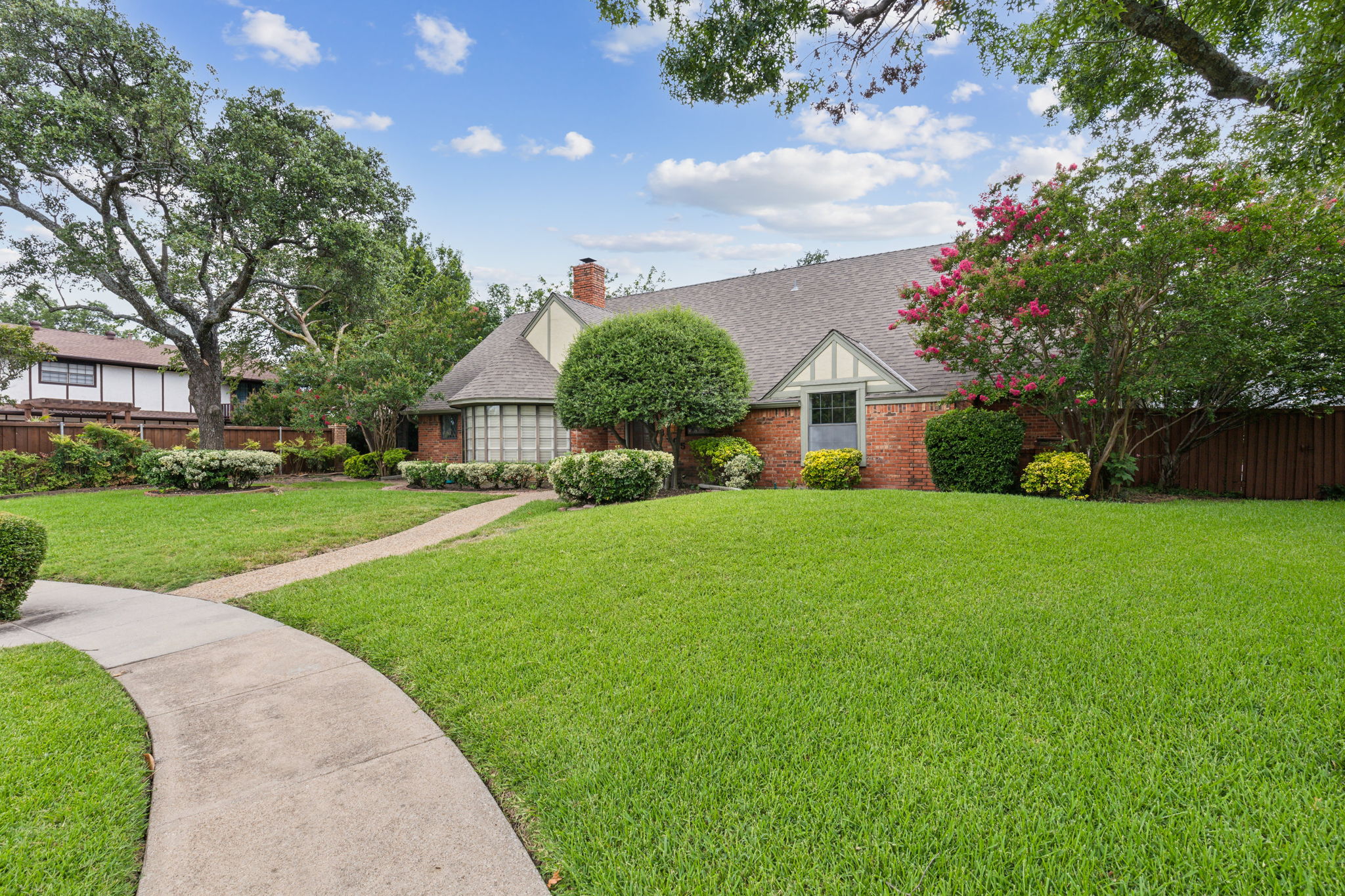
You’ll find older, established neighborhoods, mature trees, Downtown Plano, parks, and nature areas that don’t fit the stereotype of a concrete-heavy North Dallas suburb.
Saying, “I want to live in Plano,” is really just the beginning of the conversation. The better question is: What part of Plano actually fits the way you want to live?
Downtown Plano Feels Different Than You Might Expect
If your impression of Plano comes from its newer commercial corridors, Historic Downtown Plano might surprise you.
It’s one of those areas that can feel disconnected from the stereotype of Plano.
You get older buildings, local businesses, restaurants, walkability, and more of a distinct neighborhood feel. It’s a much different experience than the large developments and corporate campuses farther west.
That distinction came up during our conversation about Plano because one of the criticisms you sometimes hear is that the city can feel too big, too suburban, or too much like everything was planned around major roads and shopping centers.
Downtown Plano is a pretty good counterexample to that.
It also illustrates why you shouldn’t judge an entire DFW city based on the handful of areas you’ve driven through.
There’s More Nature in Plano Than People Realize
Here’s another one that catches people off guard.
Plano has some legitimately impressive outdoor spaces.
Oak Point Park and Nature Preserve is probably the best example. During our podcast, we talked about taking someone there who had grown up in nearby Frisco and was living in Plano. He didn’t even know it existed.
His reaction was basically, “How did I not know this was here?”
That’s the point.
Oak Point isn’t just a neighborhood park with a playground and a couple of soccer fields. It’s a substantial natural area with trails, a lake, and plenty of room to get outside.
Plano also has other protected natural areas and an extensive parks and recreation system. There’s even an outdoor amphitheater near Oak Point that hosts community events.
For a city with nearly everything you’d expect from a major suburb, having access to those kinds of outdoor spaces is a big deal, and it’s something you might miss if you’re evaluating Plano entirely from Google searches and real estate listings.
Some of Plano’s Best Food Isn’t on a “Top 10” List
Plano’s size and diversity have also created an excellent restaurant scene.
Of course, there are plenty of national chains. Plano is big enough to attract and support almost every major restaurant concept you can think of, but that’s not the interesting part.
The interesting part is the smaller restaurants you discover after you’ve lived here for a while.
On the show, we talked about local Lebanese food, Vietnamese restaurants, Chinese food and soup dumplings, revolving sushi, and even a Japanese supermarket with its own food hall.
Those aren’t necessarily the things someone moving to DFW associates with suburban living.
But Plano has a large enough population and enough cultural diversity to support an unusually broad collection of restaurants and specialty markets.
That’s the kind of thing that’s difficult to measure on a spreadsheet but can make a big difference in your everyday life.
The Size of Plano’s Schools Comes With Trade-Offs
Plano schools are one of the first things many buyers research, but there’s another layer to that conversation.
Some of Plano’s schools are big. Really big.
For certain families, that’s a negative. They may prefer a smaller school environment where everything feels a little more intimate.
But size can also bring resources and opportunities.
One of our team members shared a personal example. His daughter wears a hearing aid, and his family discovered after moving to Plano that the school system had significant resources and teacher training available to help students with hearing loss.
They didn’t know that when they moved there, but it became an unexpected benefit once they were part of the community.
That’s a great example of why researching a community goes beyond simply looking at school ratings.
If education is important to your move, dig into the programs and resources that matter specifically to your family.
Plano Is Mature, and Not Every Community Can Say That
A lot of growth in DFW is happening farther and farther away from Dallas.
There’s nothing inherently wrong with that. Some buyers specifically want a brand-new community on the edge of the Metroplex.
But lifestyle differences are noticeable between buying in a rapidly developing suburb and buying in a mature city like Plano.
Plano has been built out over decades.
The infrastructure, employment centers, hospitals, neighborhoods, parks, restaurants, and retail are already there. There is still development happening, but you’re generally not waiting for the city around you to arrive.
That maturity also means there is tremendous variety in the housing stock.
You can find older established neighborhoods, renovated homes, larger properties, newer developments, and dramatically different architectural styles depending on where you look.
For buyers, that’s important.
For sellers, it means understanding your specific neighborhood is far more useful than looking at a citywide statistic and assuming it applies equally to every Plano home.
Location May Still Be Plano’s Biggest Advantage
For all the lesser-known things we can talk about, one of Plano’s biggest advantages has been obvious for decades: its location.
Plano sits immediately north of Dallas and provides relatively easy access to both the Dallas North Tollway and US-75.
You can head south toward Dallas, north toward Frisco and McKinney, or east and west across a huge portion of North Texas without starting from the outer edge of the Metroplex.
Plano also has major employers, hospitals, restaurants, shopping, and services within the city itself. You can live in Plano without needing to leave very often, and when you do want something Plano doesn’t have, chances are it isn’t very far away.
That’s one reason Plano has remained relevant even as newer suburbs farther north have exploded in popularity.
Why These Things Matter When You’re Buying a Home
This is where the conversation comes back to real estate.
Don’t choose Plano because a website ranked it highly, and don’t eliminate Plano because somebody told you it’s boring, expensive, or too suburban.
Go experience it.
Drive through Downtown Plano. Walk around Oak Point. Explore established neighborhoods on the east side. Spend some time in West Plano. Eat somewhere you’ve never heard of. Pay attention to your commute.
Then compare all of that with what you could buy in Frisco, Richardson, Allen, McKinney, or another DFW community you’re considering.
That’s how you make a better real estate decision.
We’re big believers that choosing the right home starts with choosing the right city, community, and neighborhood for you.
Plano has a lot to offer. But the parts of Plano that ultimately make it the right fit may not be the things that initially brought it onto your radar.
Frequently Asked Questions About Living in Plano, Texas
Does every part of Plano feel the same?
No. Downtown and East Plano can feel considerably different from the newer development and corporate areas of West Plano. Individual neighborhoods also vary significantly in age, architecture, and atmosphere.
Does Plano have good parks and outdoor recreation?
Yes. Plano has an extensive parks system, including large natural areas such as Oak Point Park and Nature Preserve with trails, open space, and a lake.
Is Downtown Plano worth considering?
If you like a more established, walkable environment with local restaurants and businesses, Historic Downtown Plano offers a different experience from many other parts of the city.
Is Plano only a good fit for families?
No. Plano’s employment centers, restaurants, location, housing options, and proximity to Dallas and other North Texas cities can appeal to many different types of buyers.
How do I know which part of Plano is right for me?
Start with the things that matter most to your daily life: commute, budget, neighborhood style, schools, or specific educational resources, recreation, and proximity to the places you visit regularly. Then compare individual neighborhoods rather than evaluating Plano as one large market.
Thinking About Buying or Selling a Home in Plano?
You can learn a lot about Plano online, but there’s a point where citywide statistics and “best places to live” lists stop being useful.
You need to know which streets, neighborhoods, and parts of town actually fit what you’re trying to accomplish.
That’s where we can help.
The Todd Tramonte Home Selling Team helps buyers and sellers throughout Plano and the Dallas-Fort Worth area understand the market at the local level. Whether you’re moving across DFW, relocating to North Texas, buying your next home, or preparing to sell a home in Plano, we’d be honored to help.
Visit DallasHomeRealty.com or call 214-216-2161 to talk with the Todd Tramonte Home Selling Team.

