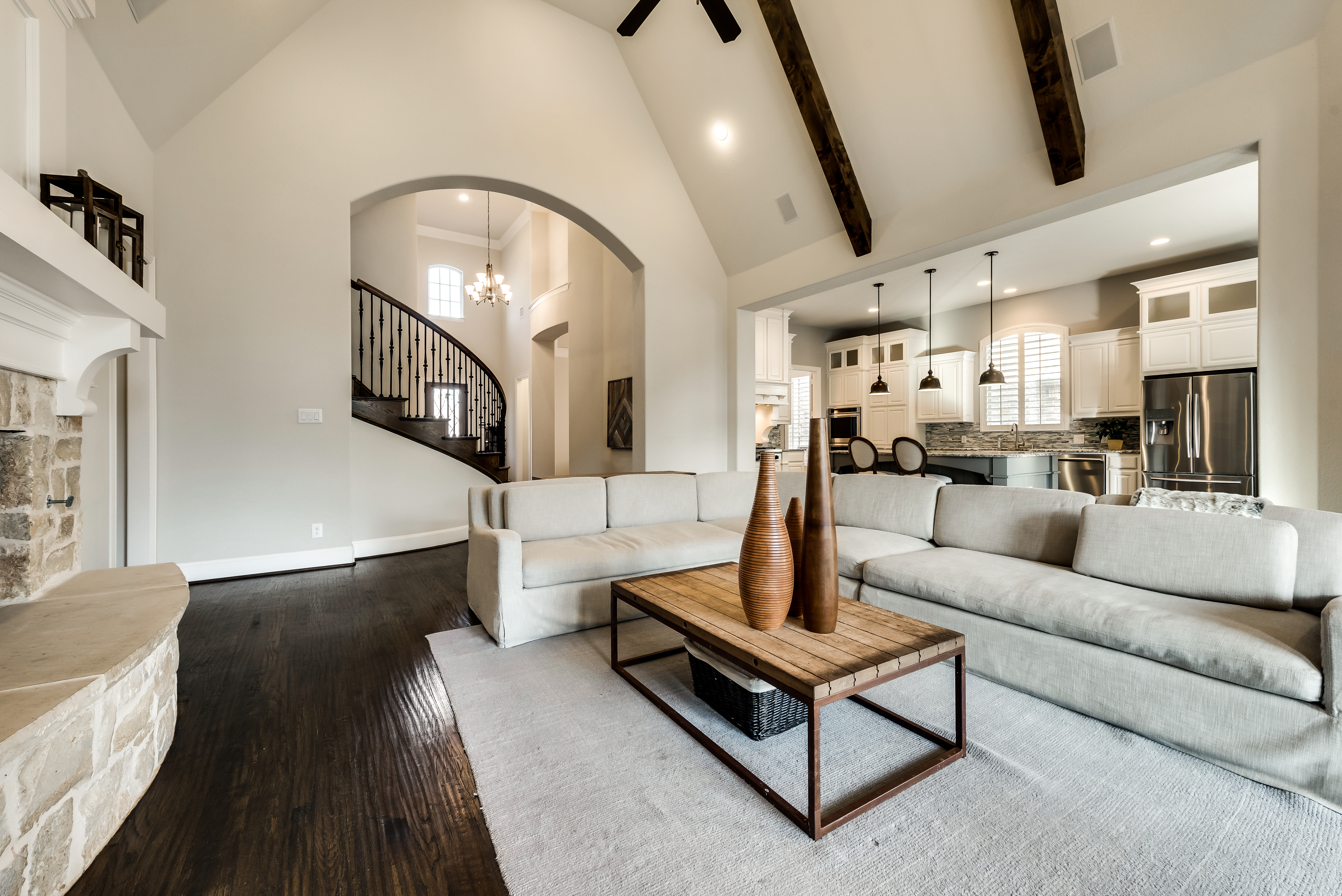
Most home sellers in Dallas-Fort Worth leave money on the table before their home even hits the market.
Not because of the market.
Not because of timing.
Not because of bad luck.
Not because of timing.
Not because of bad luck.
Because they skip or misunderstand staging.
And here’s the reality: You have about 15 minutes to influence a decision worth hundreds of thousands of dollars.
That’s how long the average buyer spends walking through your home before deciding whether they’re interested or moving on to the next house.
So the question isn’t: “Does my home look good?”
The question is: “Does my home perform when it matters most?”
Staging Is About Performance, Not Decoration
Let’s clear something up, because this is where even really smart sellers get tripped up.
Staging is not interior design.
Interior design says: “This is my style. My personality. My life.”
Staging says: “This could be your life.”
That’s a completely different objective.
Which is why staging often feels like undecorating:
- Personal photos come down
- Unique or bold design choices get simplified
- Spaces are neutralized and clarified
Even if your home looks incredible…
Even if you have great taste…
Even if you’ve worked in design…
You still need staging. Because we’re not trying to showcase you. We’re removing anything that gets in the way of a buyer seeing themselves in the home.
The Goal: Control the Showing Experience
Every showing is a moment of truth.
Buyers are walking through multiple homes. They’re comparing, filtering, and deciding... fast.
And staging allows us to control:
- What they notice first
- How the space feels
- Whether the layout makes sense
- How easily they can picture their life there
Done right, staging doesn’t just make a home look better.
It makes a buyer feel more convicted, compelled, and confident in their decision.
And confident buyers write stronger offers.
Period.
The Two Types of Home Staging
Every seller in DFW falls into one of these two categories, and both require a plan.
Occupied Staging
If you’re living in the home, a professional stager works with your existing furniture and decor, but with objectivity you simply can’t have and expertise that you likely lack.
They will:
- Rearrange furniture for flow and proportion.
- Remove distractions and personal items.
- Simplify and neutralize key areas.
- Highlight the strongest features of the home.
Sometimes these are small tweaks, but they’ll make other changes that you will never coming.
It’s about transforming how the home is experienced by using what you already have.
Vacant Staging
Empty homes are one of the biggest missed opportunities we see.
They don’t feel clean.
They feel incomplete.
Buyers walk in and think:
- “Is this room smaller than I expected?”
- “What even goes here?”
- “This feels cold…”
Vacant staging solves that by bringing in:
- Properly scaled furniture
- Intentional layouts
- Cohesive style that matches the home
Now the buyer doesn’t have to guess.
They can see it, feel it, and make sense of it.
That changes everything.
Why “Good Taste” Isn’t Enough
This is where many sellers quietly cost themselves money.
They think, “Our home already looks great.”
And it might.
But again, this isn’t about looking great.
It’s about removing friction from the buyer’s imagination.
Your style, even if it’s beautiful, is still your style.
Staging creates space for the buyer’s story to take over.
That’s the shift, and that’s why even professionally designed homes still need to be staged before going to market.
The Right Agent Doesn’t Just List. They Strategize
This is the part most people don’t think about until it’s too late.
Staging isn’t just a suggestion. It should be part of a deliberate, customized marketing plan.
At the Todd Tramonte Home Selling Team, we don’t list homes and hope for the best.
We build a plan specifically for your home that includes:
- Professional staging (occupied or vacant)
- Strategic presentation of key features
- Buyer psychology-driven presentation
Why?
Because the goal isn’t to “get it on the market.”
The goal is to win when it hits the market.
And that’s how we consistently help our clients:
- Sell for more money
- In less time
- With stronger, cleaner offers
In fact, we guarantee to sell for over the average price and under the average time compared to their neighbors.
That’s the result of doing the right things before the first showing ever happens.
The Bottom Line
If you’re serious about selling your home in Dallas-Fort Worth, staging is not optional.
It’s one of the highest-impact decisions you’ll make.
Because buyers don’t just buy homes.
They buy how a home makes them feel.
And staging is how we make sure that feeling leads to action.
FAQ: Home Staging in Dallas-Fort Worth
Do I need staging if my home already looks good?
Yes. Staging isn’t about style; It’s about helping buyers see themselves in the home and driving stronger offers.
Yes. Staging isn’t about style; It’s about helping buyers see themselves in the home and driving stronger offers.
What’s the difference between staging and interior design?
Interior design reflects the homeowner. Staging removes that personal layer to appeal to the broadest pool of buyers.
Interior design reflects the homeowner. Staging removes that personal layer to appeal to the broadest pool of buyers.
Is vacant staging really necessary?
In most cases, yes. Empty homes feel smaller and less inviting. Staging defines space and improves buyer connection.
In most cases, yes. Empty homes feel smaller and less inviting. Staging defines space and improves buyer connection.
How does staging affect my sale price?
Staging can increase perceived value, buyer confidence, and competition, leading to stronger offers.
Staging can increase perceived value, buyer confidence, and competition, leading to stronger offers.
Does every agent include staging in their plan?
No. And that’s a problem. Staging should be a strategic part of your marketing plan, not an afterthought.
No. And that’s a problem. Staging should be a strategic part of your marketing plan, not an afterthought.
:format(webp):quality(80)/u.realgeeks.media/dallashomerealty/modern-home-large-red.png)
:format(webp):quality(80)/u.realgeeks.media/dallashomerealty/map-search-black.png)