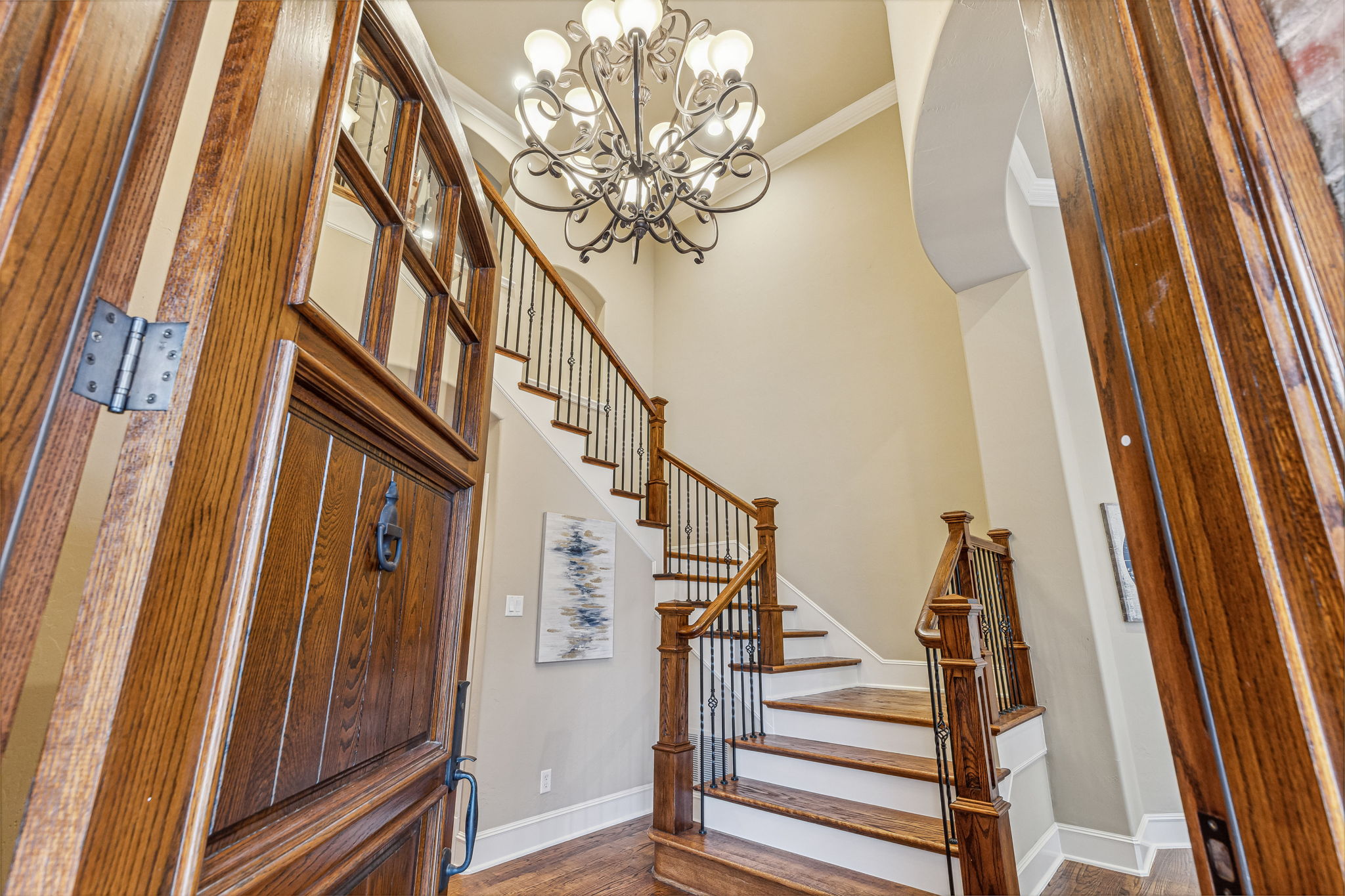
If the most valuable thing your real estate agent does is unlock the front door, you don’t have much of a real estate agent.
There. I said it.
Yes, real estate agents get buyers into houses.
Yes, we arrange showings.
Yes, we have access to information and systems the average consumer doesn’t.
But opening doors isn’t why you should hire a real estate agent.
Not even close.
A great buyer’s agent helps you decide which doors are worth opening in the first place, what you’re actually looking at once you walk through them, what risks you’re accepting if you buy, what the property is really worth to you, and how to structure the purchase intelligently if you decide to move forward.
That’s the job.
The key is just a tool.
Do You Still Need a Realtor If You Can Find Homes Online?
This is a fair question.
20-plus years ago, the real estate agent had something consumers desperately needed.
Information.
We had the book.
We had the MLS.
We knew which homes were available.
If you wanted to know what was for sale, you called an agent.
That world is gone.
Today you can sit on your couch at 11:30 at night and look at hundreds of homes for sale across Dallas-Fort Worth.
You can see photos.
You can study maps.
You can look at estimated values.
You can get notifications the minute something new hits the market.
You can favorite 37 houses, eliminate 34 of them, send the remaining three to your spouse, change your mind, and start over tomorrow.
That’s real, and I think it’s great.
I’ve never been threatened by buyers finding homes online because finding a listing was never where I believed our greatest value came from.
You may find the house before we do.
Good.
Now let’s figure out whether you should buy it.
That’s where this gets interesting.
Finding a House and Choosing a House Are Different Jobs
The internet is very good at helping you find houses.
It’s much less useful at helping you understand them.
A listing can tell you a home has four bedrooms.
It doesn’t tell you whether the floor plan actually works for the way your family lives.
A map can show you that the property appears close to the neighborhood you wanted.
It may not make obvious that you’re on the other side of an important boundary.
A listing can advertise a beautiful remodel.
It doesn’t tell you whether the work was done well.
Photos can make a backyard look enormous.
There are people in our industry who deserve Academy Awards for what they can accomplish with a wide-angle lens.
This is why an experienced buyer’s agent shouldn’t simply send you listings.
We should help you filter information.
We should remember what matters to you after the initial excitement kicks in.
You told us you needed a certain school district.
You told us resale mattered because you may move again in five years.
You told us you absolutely did not want a major renovation.
Then a gorgeous kitchen appears on your phone, and suddenly we’re all willing to forget that the rest of the house violates half the things you told us mattered.
That’s where professional judgment helps.
Not to make the decision for you.
To help you make the decision with your eyes open.
What Should a Buyer’s Agent Do During a Home Showing?
This is where the distinction becomes obvious.
An average showing can look like this:
- Open door.
- Turn on lights.
- Walk around.
- Say, “Oh, this is nice.”
- Point out the granite countertops everyone can already see.
- Ask whether you like it.
That’s not much value.
When we’re walking through a property with a buyer, we’re not just looking at whether the house is pretty.
- We’re evaluating the opportunity.
- How does this home compare with the others we’ve seen?
- How does the location affect value?
- Are there obvious condition concerns that deserve more investigation?
- What appears to have been renovated?
- What hasn’t?
- Are there features that may help resale later?
- Are there characteristics that could narrow the future buyer pool?
- Does something about the property contradict the listing information?
- What questions do we need answered before making an offer?
We’re not inspectors, appraisers, engineers, attorneys, or lenders. Good agents know the boundaries of their expertise and bring in the right professionals when needed.
But we should know enough to recognize when another question needs to be asked.
More Information Doesn’t Automatically Mean Better Decisions
This is one of the strange realities of modern home buying.
Consumers have more real estate information than ever.
That doesn’t mean buying a home has become simple.
In some ways, more information makes the process harder.
You can see an estimated value from one website.
Another website gives you a different number.
The seller has another number.
The tax district has one too.
Then your uncle who bought a house in Plano in 1997 has an opinion.
Wonderful.
Now what?
Information isn’t the scarce resource anymore.
Interpretation is.
A serious real estate professional should help you understand what matters, what doesn’t, and what deserves more investigation.
That’s very different from emailing you listings.
What Can a Real Estate Agent See That Buyers May Miss?
Sometimes it’s data.
Sometimes it’s context.
Sometimes it’s simply pattern recognition earned through repetition.
If you’ve bought three houses in your life, that’s a lot for a consumer.
A productive real estate team may be involved in more transactions than that in a week.
That repetition matters.
You begin seeing the same kinds of problems.
The same mistakes.
The same emotional reactions.
The same characteristics that buyers love today and complain about three years later.
You also learn that the house itself is only part of the purchase.
- You’re buying location.
- You’re buying future marketability.
- You’re buying maintenance.
- You’re buying taxes.
- You’re buying whatever somebody else will think about that house when it’s eventually your turn to sell it.
The granite countertops are not going to remind you of that.
Your agent should.
Should You Go Directly to the Listing Agent or Home Builder?
Buyers sometimes assume they’ll simplify things by going directly to the person selling the property.
I understand the instinct.
Cuting out the middleman seems efficient.
But representation and access are not the same thing.
The fact that someone can let you into a property does not mean their job is to protect your interests.
If you’re looking at new construction in Dallas-Fort Worth, for example, the person sitting in the builder’s sales office works in a transaction built around selling that builder’s homes.
That doesn’t make them bad.
They’re doing their job.
The question is whether you have someone doing yours.
The same basic principle applies throughout real estate.
Don’t confuse the person who gives you access with the professional whose responsibility is helping you evaluate and pursue your objectives.
Those are different roles.
Technology Should Make Great Agents Better, Not Obsolete
I think our industry gets this conversation backward.
Agents worry that technology is going to replace them.
Some of it should.
Technology should replace low-value work.
If software can perform a task faster, cheaper, and more accurately than I can, I don’t need to protect that task so I can feel important.
Use the software.
The opportunity for real estate professionals is to become more valuable, not more protective of things that aren’t valuable anymore.
You don’t need me because I know how to search a database.
You need a high-value agent because of what happens after we have the information.
- What does it mean?
- What should we do about it?
- What’s the risk?
- What’s the opportunity?
- What are we missing?
- What happens if we’re wrong?
That is professional work, and technology actually gives great agents more time and better tools to do it.
The Showing Isn’t the Transaction
Let’s say we find the house.
You love it.
Now the real work starts.
- What should you offer?
- Price is part of that question, but not all of it.
- What terms make sense?
- What’s happening with competing properties?
- What do we know about this seller’s situation without unnecessarily giving away information about yours?
- How should the offer be structured?
- What risks are created by the contract?
- What happens during the option period?
- What if the inspection identifies problems?
- What if the appraisal becomes an issue?
- What if financing changes?
- What if the closing timeline moves?
Buying a home isn’t one decision but a sequence of decisions.
The value of professional representation compounds across all of them.
Saving you from one bad decision can be worth far more than the visible tasks an agent performs throughout the entire transaction.
A Great Buyer’s Agent Should Occasionally Tell You “No”
This might be my favorite test.
If your agent loves every house you love, something is wrong.
We’re not there to ruin your fun, but we’re also not paid to become emotionally attached to the house.
You are allowed to walk through the front door and immediately imagine Christmas morning.
That’s part of buying a home.
Your agent needs to maintain enough distance to notice the thing you stopped noticing once you saw the kitchen.
Sometimes the best service we provide is enthusiasm.
Sometimes it’s perspective.
And occasionally it’s:
“No. I don’t think this is the right house for you.”
A buyer’s agent shouldn’t be trying to sell you a house.
We should be helping you buy the right one.
There’s a massive difference.
What Does a Great Buyer’s Agent Actually Do?
A great buyer’s agent helps you create clarity before you start looking, filter properties intelligently, evaluate opportunities, identify questions and risks, coordinate specialized professionals, negotiate the transaction, manage deadlines, solve problems, and keep your long-term objectives in the conversation when short-term emotion takes over.
That’s considerably more valuable than opening a door.
At the Todd Tramonte Home Selling Team, we’ve built a 13-point buyer program because we don’t believe buyer representation should consist of setting up an MLS search and waiting for somebody to text us an address.
That’s average.
We’re not interested in average.
We train our agents extensively before they represent our clients, and that training continues. We study communication. We study negotiation. We study contracts, processes, market conditions, and the decisions that actually affect our clients.
Because the public doesn’t need another person with access to a lockbox.
Dallas-Fort Worth has plenty of those.
Buyers need world-class professionals who can help them make excellent decisions with very large amounts of money.
That’s a job worth paying for.
What About Sellers?
This matters to sellers too. Why?
Because the exact same principle applies on the other side.
If you’re hiring a listing agent because they can put your home in the MLS, stick a sign in the yard, and schedule showings, you’re evaluating commodity tasks.
Those things need to happen.
They’re not the reason you hire an exceptional listing agent.
You hire a professional to position the property correctly, create demand, market strategically, negotiate effectively, protect your interests, manage the transaction, and help you produce the best realistic outcome.
Buyer or seller, the principle is identical.
Don’t pay premium attention to low-value tasks.
Find out where the real value comes from.
Opening the Door Is the Beginning
I don’t know exactly what residential real estate will look like 10 years from now.
Neither does anybody else.
I do know this.
Technology will keep making access easier.
Information will keep becoming more available.
Consumers will keep getting better tools.
Good.
I welcome all of it.
Because none of those things eliminate the need for judgment.
They make judgment more important.
When you’re buying a home in Dallas-Fort Worth, don’t choose your real estate agent based on who can get you through the front door fastest.
Choose the professional you want standing beside you once you’re inside.
That’s where the job starts.
Frequently Asked Questions
Why hire a real estate agent if I can find homes online?
Finding listings is only one small part of buying a home. An experienced buyer’s agent helps you evaluate properties, identify risks, understand market context, structure offers, negotiate terms, manage inspections and deadlines, and make better decisions throughout the transaction.
Do I need a Realtor to tour homes in Dallas-Fort Worth?
Access rules vary by property and situation, but the bigger issue is representation. Getting inside a house and having an experienced professional help you evaluate whether you should buy it are two very different services.
What should a buyer’s agent do at a showing?
A strong buyer’s agent should help evaluate the property’s condition, location, marketability, potential risks, pricing context, and fit with your goals while identifying questions that may require inspectors or other specialists.
Is it better to contact the listing agent directly?
The listing side and buyer side have different roles and interests in a transaction. Buyers should understand who is representing whom before assuming direct access is the same as having professional representation focused on their objectives.
What makes a great buyer’s agent?
Look for judgment, market knowledge, negotiation training, strong systems, clear communication, relevant experience, and an agent willing to tell you when a property may not be the right purchase.
Don’t Hire Someone Just to Open the Door
If you’re buying a home in Dallas-Fort Worth, you can find plenty of people willing to show you houses.
That’s not the standard.
At the Todd Tramonte Home Selling Team, our buyer program is built around helping clients make better decisions before, during, and after they find the home they want. Our agents are trained to bring expertise, systems, negotiation skill, local knowledge, and perspective to the process instead of simply bringing the key.
And if you’re selling, the same standard applies. You deserve more than somebody who can put your house online. You deserve a team capable of creating differentiated value where it actually affects your outcome.
If you’re considering buying or selling your next home anywhere in Dallas-Fort Worth, visit DallasHomeRealty.com or call 214-216-2161.
We’ll open the door.
Then we’ll get to work.
:format(webp):quality(80)/u.realgeeks.media/dallashomerealty/modern-home-large-red.png)
:format(webp):quality(80)/u.realgeeks.media/dallashomerealty/map-search-black.png)