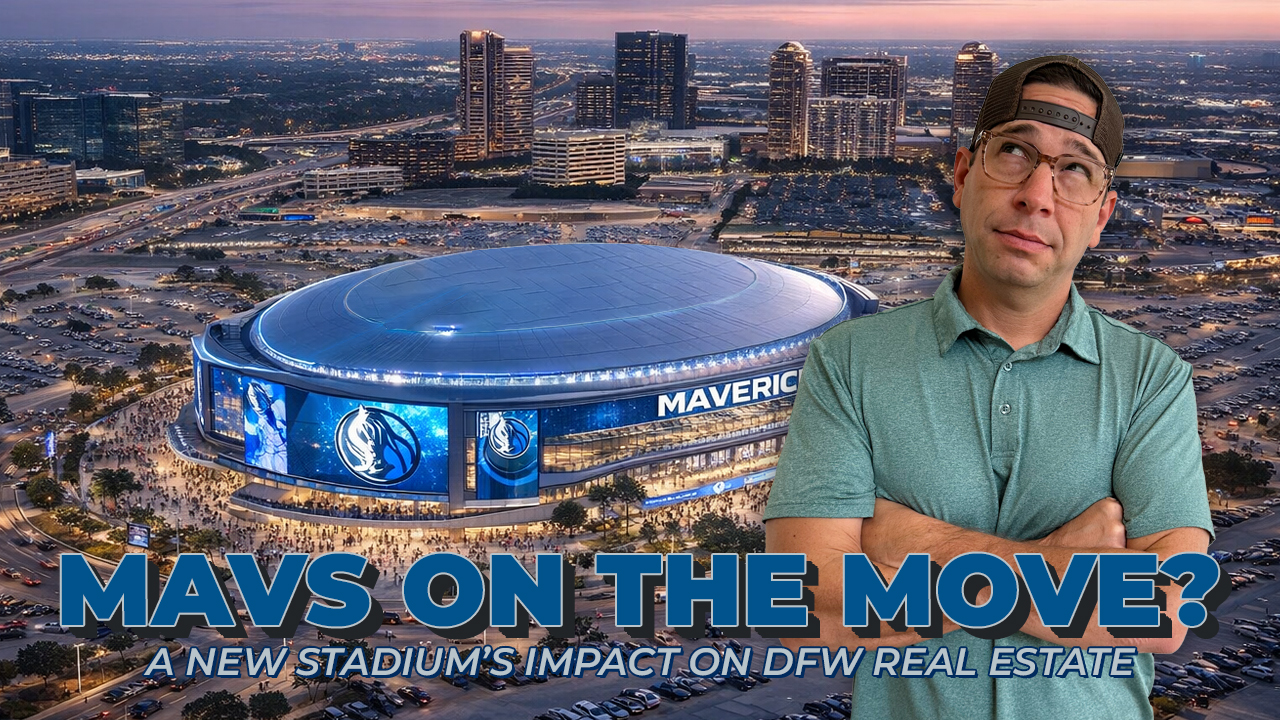
If you’ve lived in DFW long enough, you’ve seen it. A major sports venue doesn’t just bring fans. It brings:
- Roads and infrastructure upgrades
- Retail, restaurants, and entertainment
- Higher-density housing (townhomes/condos/apartments)
- Employer attention and investment
- A “new center of gravity” for where people want to live
And when that center of gravity shifts, residential real estate shifts with it.
The Mavericks arena question: Valley View vs. Downtown
Right now, the Dallas Mavericks have publicly narrowed their focus to two Dallas locations for a potential new arena, with the former Valley View Center site frequently named in reporting.
Let’s talk about what each direction tends to do to nearby housing.
Scenario A: A new Mavericks arena near Valley View (Preston + 635 area)
This is the kind of site that can turn into a full-blown mixed-use district. The modern recipe is:
- Entertainment anchor (arena)
- Restaurants + experiential retail
- Hotels
- Structured parking
- Mid-rise residential (and often luxury rentals)
- Improved pedestrian connectivity (sometimes after the first phase of chaos)
Real estate ripple effects (likely winners):
- Adjacent neighborhoods and corridors that benefit from fresh development energy
- Older housing stock that becomes “close to the action” without being in the immediate traffic blast zone
- Multifamily and townhome demand for people who want a shorter commute to events and jobs
Points of Concern (because there are always challenges):
- Construction disruption (multi-year)
- Traffic patterns changing permanently
- Investor activity increasing (sometimes helpful, sometimes annoying)
- Property tax pressure in certain pockets as values rise
If Valley View becomes the pick, you’re not just talking about an arena. You’re talking about a re-branding of that whole North Dallas corridor into something more walkable and more of a “destination.”
Scenario B: A new Mavericks arena Downtown (near City Hall)
A downtown stadium or arena play is usually about one thing: revitalization through repetition. 80-plus home games + concerts + events = constant reasons for people to be Downtown.
Real Estate Ripple Effects (likely winners):
- Downtown residential (condos/lofts) that benefit from renewed momentum
- Hospitality and retail corridors that finally get consistent foot traffic
- Areas where public and private investment stacks together (streetscapes, lighting, safety initiatives, transit improvements)
The honest catch: Downtown wins when the full ecosystem wins. If the arena is the only big move, it helps, but it’s not magic. If it’s paired with additional development, it can accelerate a downtown “shift” in a big way.
“But Todd… didn’t the American Airlines Center already do this once?”
Yes. The area around the American Airlines Center and Victory Park is the classic local example: sports + events + development = transformation.
That’s why this conversation matters. When the anchor moves, investment patterns can move too.
It’s not just the Mavericks: other stadium momentum across DFW
DFW is basically in an arms race of “sports and entertainment districts,” and that shapes housing demand.
Frisco: Toyota Stadium renovation (and why that matters)
FC Dallas’ Toyota Stadium is in a major renovation project (reported at $182M, with multi-year phasing).
Whenever a venue upgrades like that, it’s not only about soccer. It’s about making the site more competitive for concerts and events, which increases traffic, spending, and attention nearby.
The Stars Factor: future arena conversations
The Dallas Stars have been reported as evaluating future arena options as their American Airlines Center situation evolves, including discussions involving suburban sites. Whether or not any move happens, even serious public discussion tends to spark:
- Speculative development planning
- Land acquisition interest
- “What if” investment behavior around potential sites
How to think about stadium-driven real estate like a pro (not like a headline reader)
Here are the “inside baseball” indicators we watch before the masses catch on:
1) Follow land control + zoning changes, not hype
If zoning, incentives, and infrastructure planning start lining up, that’s when the market starts pricing in future change.
2) The best appreciation is usually near the district, not inside the district
Right next to the venue, you deal with noise, traffic, parking, and event congestion. A mile or two out, you enjoy the convenience without the headache. That’s often the sweet spot.
3) Stadiums favor certain property types
- Condos and townhomes often benefit from walkability and event proximity
- Well-located single-family homes can see demand spikes from people who want access but still want space
- Rentals can see increased interest (always check local rules and your goals)
4) Timing matters (a lot)
The market reacts in waves:
- Rumor + early reporting
- Official shortlist
- Announced site selection
- Planning approvals and incentives
- Construction phase (messy)
- Opening + “district maturation” (often the biggest long-term value creation)
Practical advice for DFW homeowners, buyers, and sellers
If you own near a proposed site:
- Don’t assume “instant jackpot”
- Track infrastructure plans and nearby commercial projects
- Consider a valuation review once the site becomes official (not just rumored)
If you’re buying near a proposed site:
- Decide if you want future upside or present peace
- Ask about planned road changes and future multi-family density
- Don’t overpay just because the word “arena” got mentioned
If you’re selling near a proposed site:
- Your marketing should highlight access, convenience, and lifestyle, not just “stadium!”
- Pricing should reflect reality, not Facebook-comment optimism
FAQs
Do stadiums always increase home values nearby?
Not always. They increase activity and development, but individual neighborhoods can be helped or hurt depending on traffic, noise, and how the city designs access.
What’s the biggest driver: the arena itself or the district around it?
Almost always the district. The arena is the spark. The district is the wealth builder.
When should homeowners act?
When plans shift from rumor to official site selection, and especially when zoning/infrastructure decisions start happening.
Want to know what a stadium shift could do to your specific neighborhood?
The impact can vary wildly, even street by street. If you want a real valuation and strategy conversation (not a generic Zestimate), reach out to our team, and we’ll map it out with you. Just call 214-216-2161.

