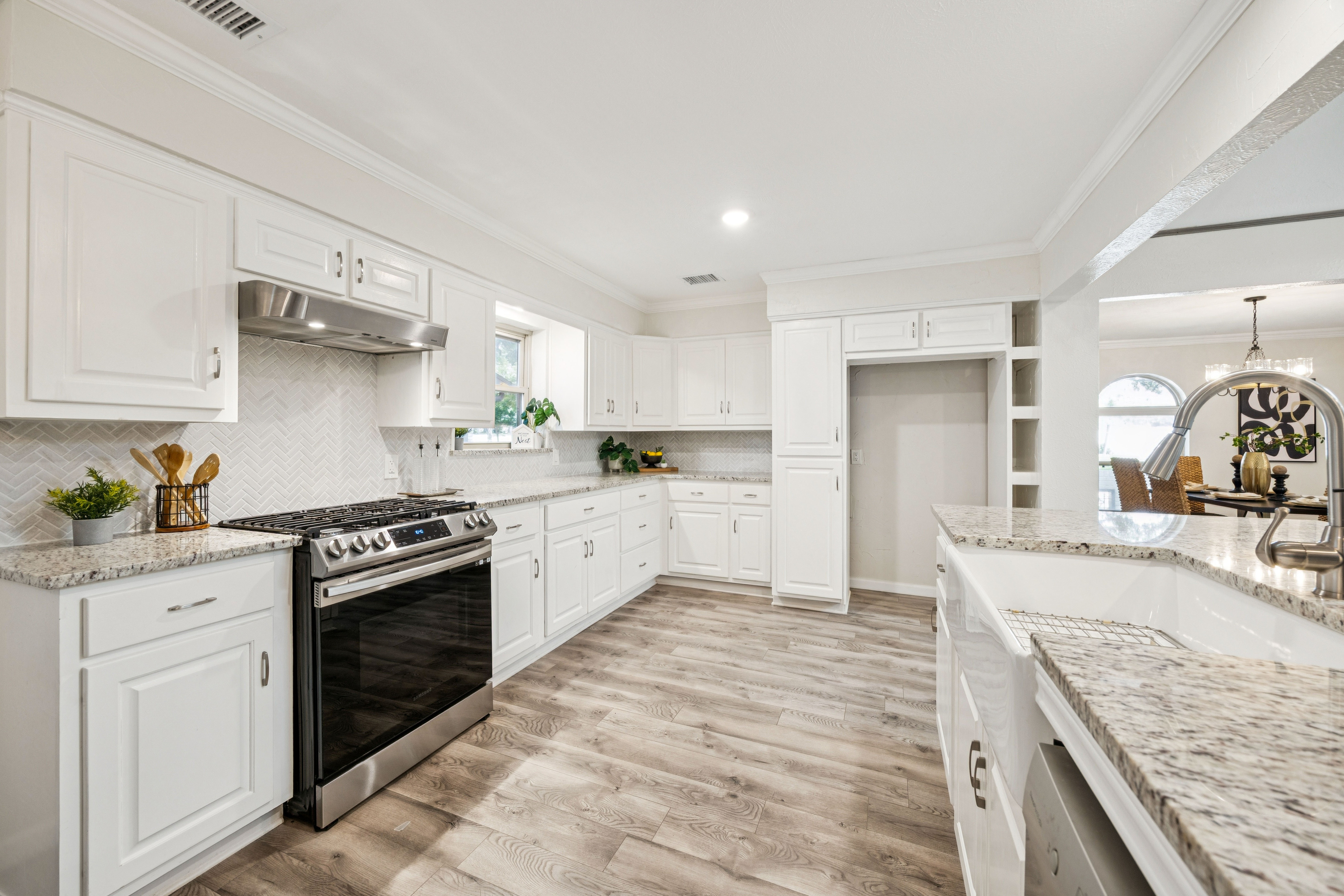
If you've ever thought about selling your home, chances are someone has given you this advice:
"You need to remodel the kitchen first."
Sometimes that's excellent advice.
Sometimes it's expensive advice.
And sometimes it's completely wrong.
One of the biggest misconceptions in real estate is that every dollar you spend updating your kitchen automatically increases your home's value. It would be nice if it worked that way, but it doesn't.
After helping Dallas-Fort Worth homeowners buy and sell homes for more than two decades, we've learned that the smartest sellers don't ask, "Can I remodel my kitchen?"
They ask:
"Should I remodel my kitchen?"
Those are very different questions.
Start With the Right Goal
Before making any major investment, decide what you're trying to accomplish.
Are you remodeling because you want to enjoy your home for the next five or ten years?
Or are you remodeling because you're planning to sell soon?
Those goals often lead to different decisions.
If you're staying put, build the kitchen that makes your family happy. Cook the meals you want to cook. Host the gatherings you want to host. Create a space you'll enjoy every day.
That's lifestyle value.
But if you're preparing to sell, the conversation changes.
Now we're talking about financial value.
And the smartest investment isn't always the biggest investment.
A Kitchen Doesn't Have to Be Brand New to Sell Well
One of the biggest mistakes sellers make is assuming buyers expect a magazine-worthy kitchen.
Most don't.
What buyers want is a kitchen that feels:
- Clean
- Functional
- Bright
- Well maintained
- Cohesive
That's very different from "completely remodeled."
In fact, we've seen beautifully maintained kitchens outperform recently remodeled kitchens because the remodel wasn't done well or didn't fit the neighborhood.
Remove the Negatives Before You Add the Positives
This is one of our core philosophies, and it applies perfectly to kitchens.
Before replacing cabinets or tearing out countertops, remove the things that distract buyers.
Ask yourself:
- Is there an outdated appliance that immediately catches the eye?
- Are cabinet doors loose or damaged?
- Is the lighting dim?
- Are the countertops chipped?
- Is the grout stained?
- Does the kitchen feel cluttered?
- Are there obvious maintenance issues?
Sometimes eliminating those negatives creates more value than spending tens of thousands of dollars on a full remodel.
One example from our own experience illustrates this perfectly.
Years ago, after updating nearly everything else in our kitchen, we still had the original oven. It worked just fine, but it immediately dated the room. Rather than leaving buyers with "the old oven house" in their minds, we replaced it with an affordable newer model.
That small change removed a distraction that would make a strong (and bad) impression on potential buyers.
Know Your Neighborhood
This is where local expertise matters.
Imagine homes in your neighborhood typically sell between $650,000 and $750,000.
Now imagine you install a luxury chef's kitchen with commercial-grade appliances, custom cabinetry, imported stone, and every high-end feature imaginable.
Will it make your home nicer?
Absolutely.
Will buyers appreciate it?
Probably.
Will it increase your home's value enough to recover the entire investment?
Not necessarily.
Every neighborhood has pricing expectations.
The goal isn't to create the nicest kitchen in Dallas.
The goal is to create the kitchen buyers in your market expect at your price point.
Cosmetic Updates Often Deliver Better Returns
If you're selling within the next year or two, cosmetic improvements frequently provide a better return than a complete remodel.
Consider cost-effective updates like:
- Fresh paint
- Modern cabinet hardware
- Updated lighting
- New faucets
- Fresh backsplash
- Replacing one outdated appliance
- Professional deep cleaning
- Touch-up painting
- Decluttering countertops
Individually, these aren't dramatic.
Together, they can completely change how buyers experience the kitchen.
Don't Cut Corners
Here's the flip side.
If you decide to remodel, do it well.
Poor installation, inexpensive materials trying to imitate luxury, uneven finishes, and sloppy workmanship don't inspire confidence.
In fact, a poorly remodeled kitchen can create more hesitation than an older kitchen that's simply been well maintained.
Buyers begin wondering:
"If this is what I can see... what can't I see?"
That's not the reaction you want, but it’s a valid one.
Think About Buyer Psychology
Buyers rarely evaluate a kitchen line by line.
They don't walk in with a clipboard assigning points.
Instead, they ask themselves:
- Can I picture myself here?
- Does this feel welcoming?
- Can I imagine hosting family here?
- Does this home feel cared for?
Those emotional reactions matter.
That's why clean, bright, functional kitchens often outperform expensive kitchens that feel overly customized or disconnected from the rest of the home.
Sometimes the Best Decision Is Doing Less
This surprises people.
There are situations where we advise sellers not to remodel the kitchen.
Why?
Because the money can often produce a better return elsewhere.
Perhaps the home needs:
- Fresh interior paint
- New flooring
- Landscaping improvements
- Updated lighting
- Window cleaning
- Minor repairs
- Better staging
Sometimes improving the entire home slightly creates more value than dramatically improving one room.
Every property is different.
That's why there isn't a one-size-fits-all answer.
Get Advice Before Spending the Money
A kitchen remodel is one of the largest investments many homeowners ever make.
Don't make that decision based on television shows, internet opinions, or what worked for your cousin in another city.
The Dallas-Fort Worth market is unique.
Neighborhood expectations are different.
Buyer priorities change over time.
And every home has its own opportunities.
Before spending tens of thousands of dollars, talk with someone who understands your market, your neighborhood, and your goals.
You may discover that a few strategic improvements create nearly the same buyer appeal for a fraction of the cost.
That's a much better outcome.
The Todd Tramonte Home Selling Team helps homeowners throughout Dallas-Fort Worth identify the improvements that truly matter before listing their homes. Whether you're preparing to sell, searching for your next home, or simply planning ahead, we'll help you make smart decisions that fit your goals.
Visit DallasHomeRealty.com or call 214-216-2161 to schedule a conversation with our team.
FAQ
Should I remodel my kitchen before selling my home?
Not always. Many homes benefit more from strategic cosmetic updates than a complete kitchen remodel.
Does a kitchen remodel increase home value in Dallas-Fort Worth?
It can, but rarely dollar-for-dollar. The return depends on your neighborhood, price point, and the quality of the remodel.
What kitchen updates have the best ROI?
Replacing outdated appliances, updating hardware, improving lighting, painting, cleaning, and repairing visible maintenance issues often provide excellent returns.
Can an outdated kitchen still sell well?
Yes. Buyers often respond well to kitchens that are clean, functional, and well-maintained, even if they aren't brand-new.
Who can help me decide whether to remodel before selling?
The Todd Tramonte Home Selling Team can evaluate your home, your neighborhood, and current buyer expectations to help you determine which improvements are worth making before you list.

