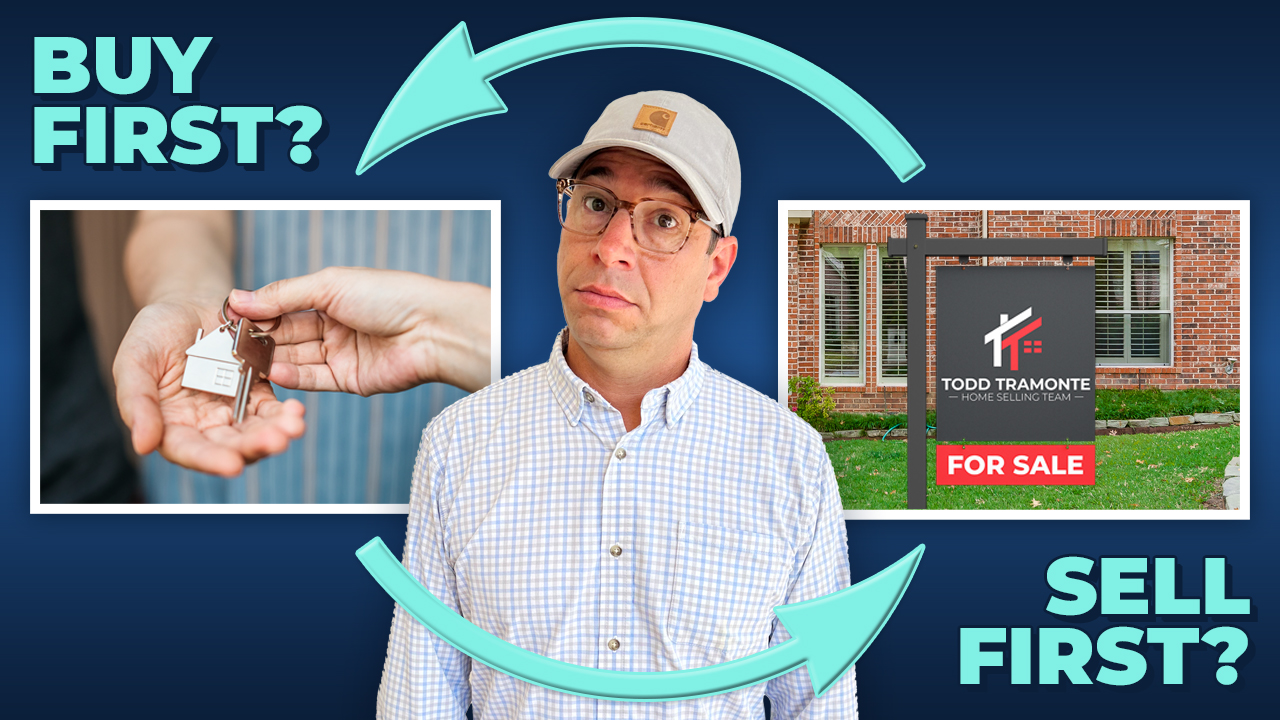
The question sounds simple, but it absolutely is not.
“Should I buy first or sell first?”
People in Dallas-Fort Worth ask this every single day. And when they get it wrong? It’s not a small inconvenience. It can get expensive, stressful, and sometimes downright painful for your finances, your family, and your future.
You don’t want two mortgages you didn’t plan for.
You don’t want to feel rushed into a home you don’t love or a bad deal.
And you definitely don’t want to end up stuck owning two homes or temporarily owning none.
You don’t want to feel rushed into a home you don’t love or a bad deal.
And you definitely don’t want to end up stuck owning two homes or temporarily owning none.
But here’s the truth most people don’t hear clearly enough: There is no one-size-fits-all answer.
The right move depends entirely on your situation: your finances, your goals, your timeline, and your tolerance for risk.
The right move depends entirely on your situation: your finances, your goals, your timeline, and your tolerance for risk.
Let’s break this down the right way.
The Two Paths: Buy First or Sell First
If you’re making a move in the DFW real estate market, you’re typically facing one of two strategies:
1. Buying a Home First
This sounds like the dream, right?
Find your next home. Move in. Then deal with selling your current one.
And sometimes, it is the dream.
Buying first can make sense if:
- You don’t need the equity from your current home to qualify for the next one
- You have strong cash reserves or financing options
- You want flexibility to prepare your current home for sale (repairs, updates, staging)
- Homes in your area are selling quickly and predictably
This path gives you breathing room. No scrambling. You avoid the game of having to be out of your previous home in 30 days without knowing where to go.
But let’s not sugarcoat it.
The risk?
- Carrying two mortgages
- Increased financial pressure
- Less urgency can sometimes lead to less discipline on the sale
And if you use tools like bridge loans or “buy-before-you-sell” programs, understand that the convenience almost always comes with a cost. Sometimes a big one.
2. Selling Your Home First
This is the more common, and often more financially conservative, approach.
You sell. You unlock your equity. Then you go buy.
Clean. Clear. Logical.
Selling first makes sense if:
- You need your equity to purchase your next home
- You want to avoid carrying two monthly mortgage payments
- You prefer financial certainty over timing convenience
But now we’ve got a different challenge…
Where do you go in between?
This is where strategy matters.
Because selling first doesn’t have to mean:
- Moving twice
- Living in temporary housing
- Feeling rushed into buying something you don’t love
With the right plan, you can:
- Negotiate leasebacks
- Align closing timelines
- Build flexibility into both contracts
- Use contingencies and creative financing
Done right, you can sell and buy with one smooth move.
The Real Issue: It’s Not Just Financial. It’s Emotional
Here’s what most real estate conversations miss: This isn’t just a transaction. This is your life.
We’re talking about:
- Kids changing schools
- Commutes changing
- Routines getting flipped upside down
- Packing, planning, and coordinating everything at once
And when you’re doing both, selling and buying at the same time, that pressure multiplies.
That’s why people make rushed decisions. That’s why they overpay, or undersell, or panic.
And that’s exactly what we want to avoid.
What About Contingencies?
Now we get into the “gray area” strategies.
A contingency basically says, “I’ll buy your home if I successfully sell mine.”
It’s a powerful tool, but it comes with trade-offs.
Pros:
- Protects you from getting stuck with two homes
- Gives you a clear path to transition
Cons:
- Makes your offer less attractive to sellers
- Can limit your negotiating power
- May not work in highly competitive DFW markets
Here’s the key:
A contingency without a plan is weak.
A contingency with a strategy is powerful.
A contingency with a strategy is powerful.
If your home is priced right, marketed aggressively, and positioned to sell quickly, sellers are far more likely to work with you.
The Hidden Lever: Strategy and Timing
This is where most people get it wrong.
They focus on the question, “Should I buy first or sell first?”
Instead of asking, “How do I structure this so I don’t get burned?”
Because the real win is this:
- One move
- Minimal stress
- No duplicate expenses
- Strong financial outcome on both sides
And yes, that is possible.
But it requires:
- Planning ahead (not reacting late)
- Understanding your options clearly
- Having professionals who can coordinate both sides
So… What Should You Do?
Here it is, plain and simple:
- If you have financial flexibility, then buying first may be your best move.
- If you need certainty and access to your equity, then selling first is likely wiser.
- If you want to minimize risk, then build a strategy that protects both sides.
And most importantly: Slow down before you speed up.
The people who win in this process aren’t the fastest. They’re the most prepared.
Final Thought for DFW Home Buyers and Sellers
The Dallas-Fort Worth market gives you opportunity, but it also demands clarity.
You don’t have to:
- Move twice
- Take unnecessary financial risks
- Settle for stress and chaos
You can sell and buy in a way that feels:
- Strategic
- Smooth
- Enjoyable
But only if you treat this like the big decision it is.
FAQ: Buying vs Selling First in DFW
Q: Is it better to buy or sell first in Dallas-Fort Worth?
A: It depends on your financial situation, timeline, and risk tolerance. There is no universal “best” option.
A: It depends on your financial situation, timeline, and risk tolerance. There is no universal “best” option.
Q: Can I buy a home before selling mine?
A: Yes, if you can qualify financially without needing your current home’s equity.
A: Yes, if you can qualify financially without needing your current home’s equity.
Q: What is a contingency in real estate?
A: It’s a contract condition that allows you to buy a home only if your current home sells.
A: It’s a contract condition that allows you to buy a home only if your current home sells.
Q: Will a contingency hurt my offer?
A: It can, especially in competitive markets, but strong preparation and strategy can offset that.
A: It can, especially in competitive markets, but strong preparation and strategy can offset that.
Q: How can I avoid moving twice?
A: With proper planning, aligning timelines, negotiating leasebacks, and structuring contracts, you can often move just once.
A: With proper planning, aligning timelines, negotiating leasebacks, and structuring contracts, you can often move just once.
:format(webp):quality(80)/u.realgeeks.media/dallashomerealty/modern-home-large-red.png)
:format(webp):quality(80)/u.realgeeks.media/dallashomerealty/map-search-black.png)