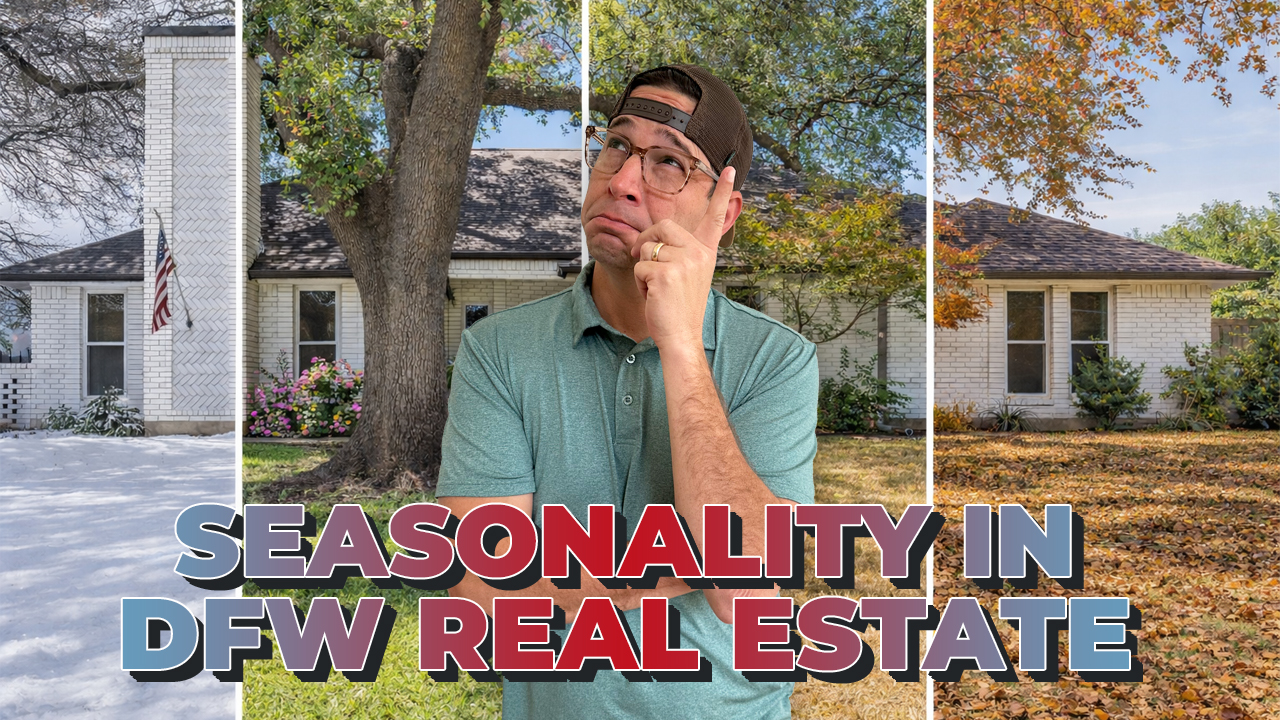
 If you’ve paid attention to real estate in DFW (or most other markets) for more than five minutes, you’ve probably heard someone push the idea that spring is the best time to buy or sell a home.
Yes, there is seasonality in the Dallas-Fort Worth real estate market. But if you blindly follow it like everyone else, you can get crushed.
Let’s break down what’s actually happening in the DFW housing market and how to use seasonality to your advantage instead of becoming a victim of it.
What Is Real Estate Seasonality?
Seasonality simply means the real estate market follows predictable patterns throughout the year.
In Dallas-Fort Worth, here’s what the data consistently shows:
- January is typically the slowest month for home sales.
- Activity increases in February.
- There’s a major jump in March.
- May, June, and July are usually peak months.
- Activity tapers off in the fall and slows further in winter.
For example, in recent years:
- Around 22,000 homes sold in January.
- Around 33,000–35,000 homes sold per month in peak late spring and early summer.
That’s about a 50% increase from the slowest to the busiest months.
Here’s an important distinction: It’s busier in spring and summer, but it’s not dead in winter. There is no “ghost town” season in DFW real estate. This isn’t rural Minnesota with 12 feet of snow. 22,000 home sales is far from nothing.
Homes sell year-round in North Texas.
Why Spring and Summer Are the Busiest Months in DFW
Here’s why most buyers and sellers move during spring and summer:
- Families prefer to move when school is out.
- Weather is more pleasant.
- People associate spring with fresh starts.
- Sellers believe (often correctly) that more buyers are shopping.
And because most people believe this, many act on that belief and move at the same time. Which creates opportunity.
How Seasonality Impacts Home Buyers in Dallas-Fort Worth
If you’re buying in peak season (March–July), here’s what you’re up against:
- More competition
- Sellers with higher price expectations
- Less negotiating leverage
- Busier inspectors, contractors, and lenders
- Faster-moving listings
When a seller has had six showings this week, they’re less likely to:
- Agree to repair concessions
- Accept a low offer
- Offer flexibility on closing terms
But if you’re buying in December or January?
That same seller might be thinking, “We haven’t had a showing in two weeks. Let’s make this work.”Less competition often equals more leverage.
That doesn’t automatically mean winter is “better.” It means the strategy changes.
How Seasonality Impacts Home Sellers in DFW
If you’re selling during peak season:
- More buyers are actively looking.
- You’re more likely to generate multiple offers.
- You may sell faster.
But here’s the part most agents don’t explain: You’re also competing against more listings.
More inventory equals more choices for buyers.
If you sell during a slower season:
- Fewer buyers are shopping.
- But there are usually fewer competing homes.
- Serious buyers tend to be highly motivated.
With the right pricing and marketing strategy, you can outperform the “peak” market in what people wrongly call the off-season.
Seasonality affects leverage and not just volume.
Mortgage Rates and Seasonal Demand
Here’s something most consumers don’t consider: Mortgage demand increases in peak season.
When more buyers are applying for loans:
- Lenders get busier.
- Appraisers get busier.
- Inspectors get booked out days in advance.
Supply and demand doesn’t just affect home prices. It affects service availability and, at times, pricing across the board.
In slower months? You can often move faster and with less friction.
Convenience goes up. Pressure goes down.
The Biggest Mistake DFW Buyers and Sellers Make
The mistake isn’t buying in spring. The mistake is using a one-size-fits-all strategy in every season.
Most people:
- List their home the way everyone else does.
- Offer the same contract terms that everyone else does.
- Negotiate like it’s a normal day in a normal market.
And then they blame “the market” when things don’t go their way.
The market isn’t the problem. Lack of strategy is.
When Is the Best Time to Buy or Sell a Home in Dallas-Fort Worth?
The honest answer? The best time is when it’s right for your family and your finances.
But once that timing is set, the strategy must match the season.
Buying in peak season requires:
- Aggressive positioning
- Clean offers
- Smart escalation strategy
- Pre-inspection or fast inspection scheduling
- Strong lender communication
Buying in slower months requires:
- Patience
- Strategic negotiation
- Leveraging seller fatigue
- Repair and concession awareness
Selling in peak season requires:
- Pricing that invites competition
- Proper staging and launch timing
- Negotiation discipline
- Selling in slower months requires:
- Scarcity strategy
- High-quality marketing
- Creating urgency where none naturally exists
Different season. Different playbook.
Are We in a Spring Market Right Now?
Here’s something most people miss: Real estate seasons don’t follow the calendar.
If contracts written today close in 30–45 days, February activity often funds in March and April.
Which means the “spring market” typically begins before most people realize it.
By the time you feel like it’s busy? You’re already in it.
The Opportunity in Dallas-Fort Worth Real Estate Seasonality
Because DFW doesn’t have extreme weather shutdowns, the seasonal difference is meaningful, but not dramatic.
There are tens of thousands of transactions every month.
The opportunity isn’t avoiding the busy season.
The opportunity is outperforming the crowd inside whatever season you’re in.
That takes:
- Data awareness
- Tactical negotiation
- Timing strategy
- Experienced guidance
Not emotions. Not hope. Not “we’ll see what happens.”
Final Word: Don’t Follow the Crowd
Should you blindly follow the herd into spring because that’s what everyone does?
No.
Should you avoid spring just to be contrarian?
Also no.
Should you build a custom strategy based on:
- Your timeline
- Your financial goals
- The current DFW housing data
And the season we’re actually in?
Totally.
If you’re considering buying or selling in Dallas-Fort Worth, the conversation should not be: “Is it spring yet?”
It should be: “How do we win in this season?”
And that answer is never one-size-fits-all.
:format(webp):quality(80)/u.realgeeks.media/dallashomerealty/modern-home-large-red.png)
:format(webp):quality(80)/u.realgeeks.media/dallashomerealty/map-search-black.png)